How the Fed Is Quietly Inflating the AI Bubble While Hiking Your Electric Bill
When the Fed raises the price of money, it hikes electric bills, property taxes, mortgage and auto costs, and the price of working capital. It’s time to drop our illusions about the central bank.
Oct 17, 2026
In D.C. and Wall Street, it’s an article of faith that the only solution to high prices and inflation is to have the Federal Reserve increase interest rates. A few days ago, the Wall Street Journal profiled Fed official Beth Hammack, a 30 year veteran of Goldman Sachs before joining the central bank in 2024. Like the rest of her colleagues, she’s struggling with an inflationary economy, and trying to figure out the right policy approach to bring down the rate of price growth. While she doesn’t mention it, keeping the stock market up is also likely on her mind.
Hammack’s specific concern that too many businesses have pricing power, which is leading to excessive wage growth. She’s known as a monetary ‘hawk,’ which means her view is that the Fed needs to hike rates, and ultimately throw the economy into a recession so wages stop growing. Only then will prices stop rising so quickly. Few people noticed the article profiling Hammack, or the fact that her goal is to suppress wages. It’s not noticeable, since it’s just how we’ve become accustomed to thinking about the role of the Fed, which is to punish ordinary people under the veil of technocratic inflation-fighting.
Critics of the Fed are generally brushed aside as irrelevant, since we are unwilling to make the hard choices to control consumer prices. And yet, the Fed has been raising rates for years now, with a limited impact on consumer price increases. After the pandemic, the Fed missed the huge surge of pricing pressure, and then began a radical increase in 2022 before almost crashing markets in 2023. Then it paused, due to fear that investors might be hurt. It soon began cutting rates as Donald Trump demanded they do so to help speculators. In the last few months, they have begun their interest rate hikes again, though they are keen to pause at any point that the AI bubble wobbles.
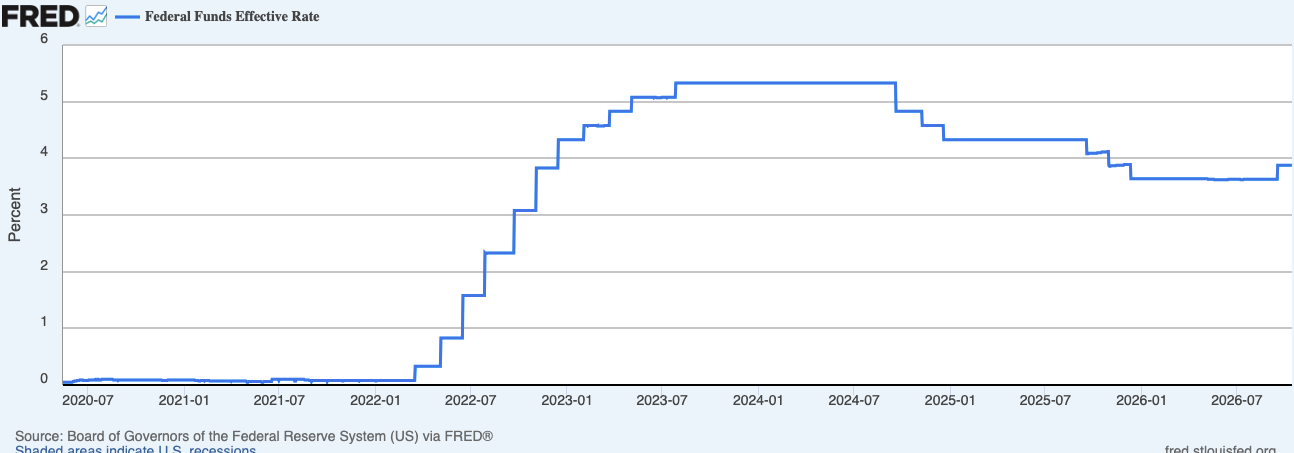
These choices are consistent with a model of monetary policy assuming the only way to lower prices is to reduce demand, bounded by the political reality that they must keep asset prices high to placate their stakeholders on Wall Street. But what if there’s a theoretical problem, not just a moral one, with this approach? What if higher interest rates aren’t reducing prices, but increasing them? In at least one sector, that’s what’s happening.
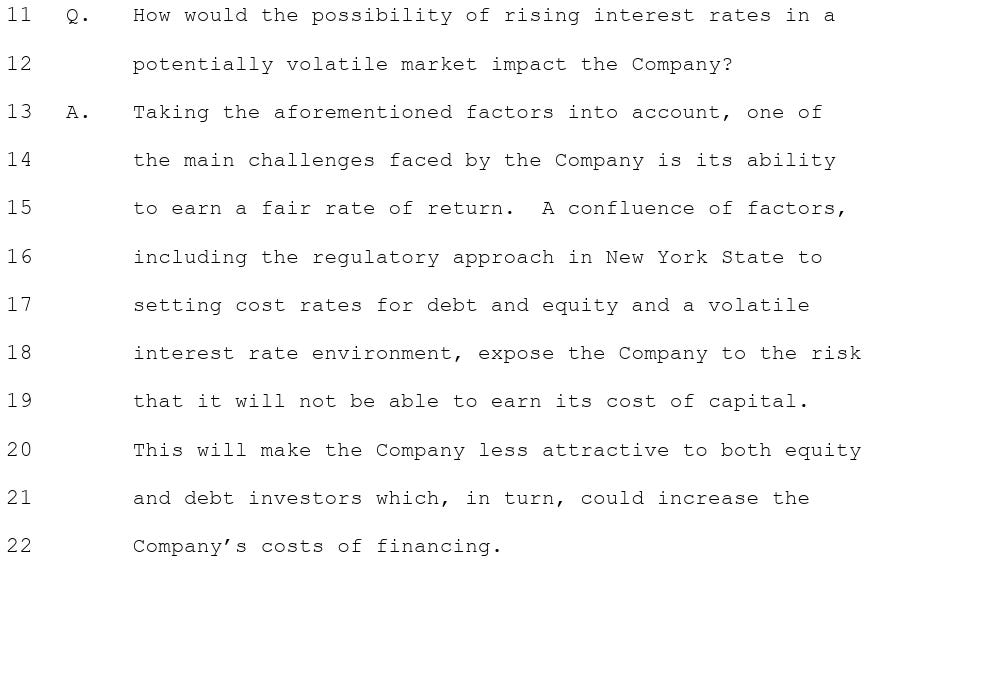
Early last year, Con Edison filed a docket to New York state regulators asking to raise prices on consumers, arguing the “main challenge” was the company’s “ability to earn a fair rate of return.” Among other factors was “a volatile interest rate environment” that “expose the company to the risk that it will not be able to earn its cost of capital.”
But one key new excuse was the “volatile” interest rate environment, aka the Federal Reserve increasing rates. Basically, let us raise rates on consumers to pay Wall Street lenders, who are demanding higher returns due to the Fed’s actions.
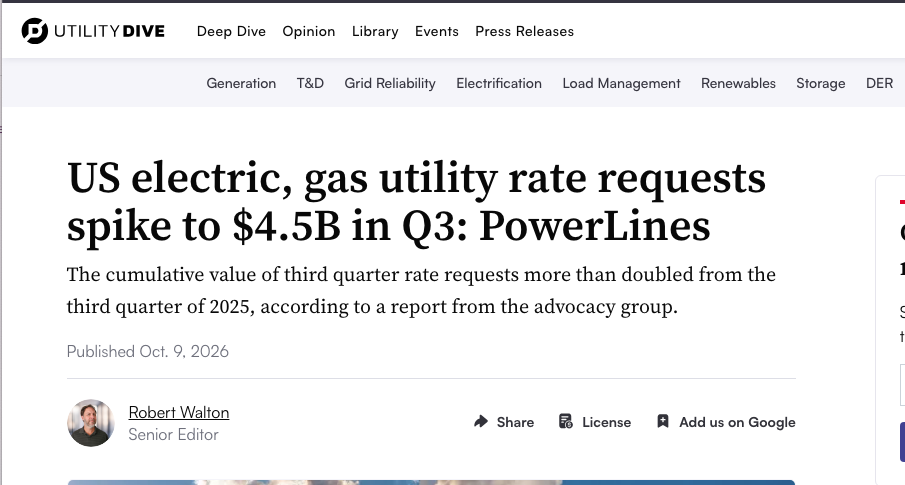
And Con Edison is not alone; last month, Otter Tail in Minnesota made the same request - pay us more because interest rates are up. And Oncor in Texas got a rate bump as well, justifying it in part because “Interest rates have significantly increased.” Indeed, we’re starting to see utilities more broadly plan to ask for rate hikes as a result of higher interest rate costs.
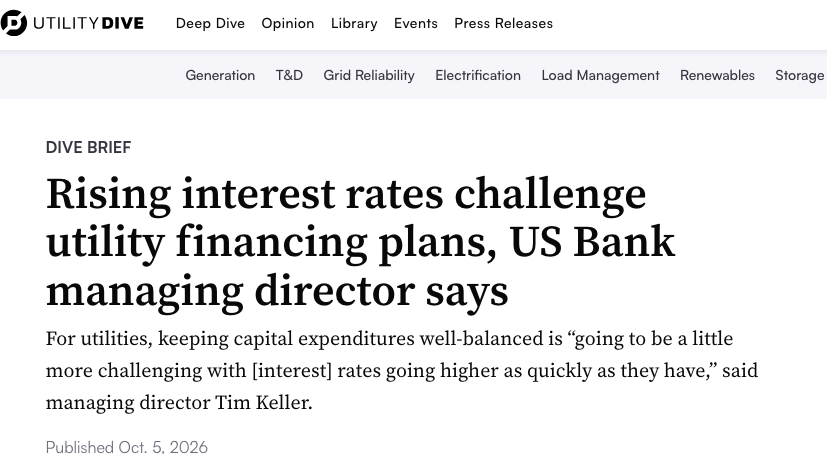
Now, it’s important to note the villain here in this particular case isn’t actually the utilities. They are engaged in a bit of bad behavior, attempting to use interest rates to justify higher equity returns, but they are right that higher bond rates do drive up costs. If the rate they have to pay on their bonds goes from, say, 4% to 7% to finance new plants and equipment, they have to get that amount from customers. And since that interest rate is just what they are paying to bondholders, they aren’t making extra profit here, it’s pure pass-along costs to lenders. (As a technical matter, make their profits on returns on equity, not debt.)
In other words, in the utility sector, what is happening is that a higher interest rate is driving higher consumer prices, not lower ones. That’s the opposite of what the Fed models used by people like Hammack assume. And it’s not just utilities, a bunch of areas have a similar dynamic. Municipal bond costs are going up as interest rates rise, which means property taxes have to increase. The costs of farm inputs, notably the financing for equipment, livestock, and crops, is increasing with the price of money. Any business with working capital has to pay more. Credit card prices, auto payments, mortgage payments - all of these are consumer prices, and they are going up.
BIG is a reader-supported newsletter focused on the politics of monopoly and finance. It’s entirely financed by you. As politics gets weird and the AI bubble pops, honest information is more important than ever. If you are not yet a paid subscriber, please consider becoming one. BIG is journalism and advocacy that challenges power. You can always get lies for free. The truth costs a few bucks, but in the long run it’s much cheaper. You can subscribe here:
In other words, the conventional wisdom that higher borrowing costs is the route to reduce inflation seems to be wrong, at least in these areas. That said, there is a real rejoinder. If people and businesses have to pay more as a result of high interest rates, ultimately they will have to cut back and the economy will slow, possibly into a recession. Enough companies will go bankrupt to dry up demand, leading to cheaper inputs and more unemployment, and that will reduce inflation. And that is correct, but the cost is high.
What the Fed’s model does is not slow investment to gently bring down inflation, but starkly break enough balance sheets to create a private credit shock. It is that credit shock is what leads to economic restraint. It’s a brutal approach, and it requires a crash. And sure a crash will bring down inflation, but it’s very much a “destroy that village to save it” mentality.
Still, if that were the only way to address inflation, well, then it would be a tough decision, but justifiable. But is it? The other possibility is something few consider today. We could simply have the government put in rules to charge different interest rates for different purposes. Utilities would get a lower rate, so would municipalities and mortgage holders. That would keep a lid on costs. Speculators would get a higher interest rate, so would areas of the economy that we think need to slow. Basically, we’d channel capital directly with regulations.
Believe it or now, that’s how things used to work. The specific mechanism is that America had different banking sectors, such as thrifts for mortgages, commercial banks for commerce, and investment banks for speculative and corporate purposes. They all had different regulatory schemes, and they didn’t co-mingle, so it was possible to loosen credit for mortgages without loosening credit for corporate lending, or vice versa. It was only after deregulation that the Fed simply set “THE” interest rate, as if buying a fridge and buying shares of SpaceX on margin needed to be handled in the same money market.
When I was researching the history of monopoly power, I noticed that’s how Democrats used to understand interest rates and central banking. Populist Congressman Wright Patman, who was in office from 1929-1976, absolutely hated high interest rates. Today, we tend to defer the choice on interest rates to the ‘independent’ central bankers at the Fed, but that anti-political stance is a relatively new development. In 1964, the Democratic party platform, for instance, insisted on “the importance of low interest rates.”
Patman was the leader of the low interest rate faction, arguing that higher rates led to higher prices. Higher rates are “like pouring gasoline on a fire,” he said in 1966. “It makes prices higher, not lower…. Builders can’t afford to pay those high rates to build homes and people can’t afford to pay even higher rates for mortgages.” He compared inflation during World War II, the government paid just 0.375% on short-term debt, by 1966 that had gone up to 5.04%. “In 1946 it cost the taxpayer $3750 to borrow a million dollars.” In 1966 it cost $50,470. In other words, it’s costing nearly 13 times more.” And inflation was much higher in 1966 than during World War II. That’s not because there weren’t inflationary pressures, but because we used credit controls, rationing, and regulation to move capital into markets where we needed production.
That is not the world we live in today. During Covid, I made the point that big banks and investors got access to credit because their institutional setups worked well, whereas small businesses and individuals didn’t have much access to banking. That’s called the Cantillon Effect, and it shows that how we deploy monetary policy is not neutral in terms of its effects on inequality. I’d add that prices don’t go up uniformly, that bigger firms can keep a lid on the inflation they must pay, while smaller ones have to pay more. And of course asset prices, like stocks and real estate, which are the prices that speculators and the superrich care about, well, those matter too. Inflation, like monetary policy, isn’t neutral.
Indeed, what deregulation was really about was bringing us a world where monetary policy makes the rich richer. Today, the only way to restrain inflation is to foster a crash and lower wages. But that’s not inherent to a market-based society, it’s a particular regulatory scheme that privileges holders of capital over the rest of us. We could do things differently, but actually imposing clear rules on the financial sector and breaking it apart requires a massive reallocation of political power.
As Americans revolt against high prices and inflation, the main institution in D.C. tasked with taming consumer costs, the Federal Reserve, is still living in a world where they assume regulation can’t happen. Maybe they are right. But as your utility bill goes up, know that the reason is the nerds at the Fed who can’t imagine any monetary policy model except one that holds down prices by overcharging you until you go bankrupt, and then nodding approvingly over the wreckage.
Thanks for reading! Your tips make this newsletter what it is, so please send tips on weird monopolies, stories I’ve missed, or other thoughts. And if you liked this issue of BIG, you can sign up here for more issues, a newsletter on how to restore fair commerce, innovation, and democracy. Consider becoming a paying subscriber to support this work, or if you are a paying subscriber, giving a gift subscription to a friend, colleague, or family member. If you really liked it, read my book, Goliath: The 100-Year War Between Monopoly Power and Democracy.
cheers,
Matt Stoller