One of the less remarked-upon aspects of becoming an atheist is how it changes the way you see a sunset. If you believe in an almighty, omnipresent God, then sunsets are one of God's intentional creations, which means that the beautiful colors refracting through the darkling sky were chosen to produce that effect. To gaze upon a sunset with religious faith is to encounter the intentional act of another mind. To gaze upon that same sunset without faith is to look upon something striking, beautiful, and yet empty; not empty of wonder or beauty, but empty of purpose. No one hung that sun in the sky, no one chose its colors as it sank. It may still be beautiful, but that's a fundamentally different kind of beauty. There's a sunset that sits halfway between a religious sunset and an atheist sunset: an artist's depiction of a sunset. This represents the choices of another person, another mind, and at the very least, that mind was talking to itself, trying to take something from inside the mind and put it outside of the mind. Very often, the mind that directed the capturing of the sunset wanted to say something to other people, perhaps even you (think of a loved one sending you a cameraphone picture of a sunset). That painting or photo may not be divine, but it is certainly intentional. To look upon a painting of a sunset – or even a photo of a sunset – is to look upon something someone chose to make. You don't slip and accidentally create a sunset painting. Sunset paintings aren't accidents. The sunset painting has something to say. Figuring out intentions is our minds' reflexive preoccupation. It's what keeps us from dying in traffic, it's what lets us win at poker. It's the key to love and parenting, to effective management and "managing up." It's why we get mad at people, and why we forgive them. It's why our hearts race in sympathy with the characters in a book or on a screen. It's the automatic and irresistible starting point for every encounter with a poem, a song, a book or a sculpture. It's the most fundamental difference between a sculpture of a tree and a tree: the tree grew all on its own, while the sculpture was made, on purpose, by another person with another mind. This reflex to attribute intention explains why AI is so controversial, so compelling, and so eerie. Mark Fisher defines eeriness as "when there is something present where there should be nothing, or if there is nothing present when there should be something": To look upon an AI-generated text or image is to look upon a thing that was extruded, not chosen. You can slip and prompt an AI-generated image of a sunset, and it will embody no intentionality on anyone's part. This isn't something we have any experience with. When we see a painting, we reflexively interpret it as having a painter. When we read a book, we reflexively impute auctorial intent to its words. When we converse, we reflexively form a theory about the mind directing the other half of the conversation. But we can't do this with AI. Anyone who understands how the theory-free statistical inference systems we call "AI" (at this time) work will understand that they are systems that cannot form intent, that have nothing to form intent with: Even so, it's hard (or perhaps impossible) to avoid the reflex to impute intention to things that seem to have intenders. Think of your autonomic, unavoidable emotional response to the fictional characters you encounter in literature. Feeling sorrow or joy for imaginary people is weird. They aren't real, and you know they aren't real, and yet you may find yourself moved to tears by their plight. That aesthetic experience of literature arises from a consensual hack to our reflex to impute human minds to things that are typically the product of human intention. When we experience another person's will – their words or deeds – we try to figure out who they are, and how they feel, and why they act the way they do: We do this even when we are confronted with just the evidence of others' words or deeds, as when a friend describes an encounter with a stranger. For your reflexive, intention-seeking mind, the author who describes the deeds of imaginary people is an irresistible signal to fire up the old empathy machine and start trying to put yourself in the skins of the people of the tale: To "converse" with an AI is to carry on a dialog with a fictional character, who is no more real than the imaginary people in a novel. Indeed, the chatbot is less real than the character, because the character is the product of another mind, while the chatbot's words are the product of complex mathematical operations conducted over a massive database of all the words humans have uttered, arranged by their frequency in relation to one another. When that math makes something beautiful or striking, it's like a sunset: no matter how striking it is, it's empty. No one chose those colors. No one chose those words. In other words, when we interact with an AI, we hallucinate the person on the other side of the interaction. Those hallucinations are far more common and far more consequential than any AI-generated "hallucinations" (these are more properly called "errors" or "defects"). Fortunately, for most of us, the intensity of these hallucinations fades over time, and as that intensity drops off, the character of those hallucinations changes, too. Just as most of us find it easy to set aside the emotions evoked by the plight of imaginary literary figures as having less salience and "realness" than the emotions we feel over the plight of real people we know, for most of us, the experience of AI-generated material has dimmed through repetition. My first encounters with AI-generated text and images invoked wonder, arising from the tension between the part of my mind that knew this was the product of mathematical operations, and the part of my mind that insisted that a painting must have a painter, a paragraph must have a writer, and a conversation must have an interlocutor. Looking back on the wonder I felt then, I realize that it was largely driven by how good the output was relative to my expectations about how good mathematically-derived sentences and images could be. The novelty of that experience drove me to grade the machine's output on a curve: "The wonder is not that the dancing bear dances well, it is that the bear dances at all." But with repetition, the stimulus has regressed to the mean. These outputs have an unconvincing lack of texture. The smoothness of AI-generated prose and media makes it unbearably banal. It's hack. To the extent that AI still surprises me, the surprise is about how much smoothness there is in our real world. The fact that AI can use statistical prediction to answer questions or carry on conversations tells us something important about how regular our real world is. It doesn't prove that statistical prediction is the same thing as understanding: Of course, the more you know about a subject, the less convincing the AI's responses are. To be an expert is to know about the grain of your subject: chefs can taste the pinch of spice, painters notice brushstrokes, dancers can decompose the choreography into individual motions. The other day, someone marveled to me at the quality of the editorial feedback he gets from AI for his prose, saying that a "Tell me what I'm missing" prompt generates suggestions "that would excite a university professor who'd assigned an essay." Speaking as someone who's taught a lot of writers and given a lot of feedback, I think that guy is dramatically overestimating how excited a university professor would be to see the AI-generated feedback he's getting on his essay. The fact is that non-expert writers mostly make the same kinds of mistakes in their writing, and most writing instruction consists of offering repetitive, near-identical counsel to writers who are making the same kinds of starter mistakes that their peers past, present and future have made, are making and will make. Mastering the basics of good writing is a matter of practice and feedback, and most of that feedback is rote. What makes a great writing teacher – and what helps to produce great writers – is spotting the non-standard aspects of a student's work that can be developed into a unique and powerful voice. Anyone can help you with the smooth parts of becoming a better writer. Only a good teacher can help you find and refine the texture that will make you a unique writer. That texture is especially hard to find in beginner work, because beginner work is mostly full of the completely ordinary errors of inexperience, errors that AI can reliably avoid when it extrudes text. But AI-generated prose doesn't have any of those trace-elements of uniqueness, nor can it spot them. These traces are found so many digits after the decimal-place that the AI always rounds them off before it starts doing math. The more we encounter AIs that have smoothed away the kind of texture we're attuned to, the less we're inclined to hallucinate intentionality, and the less eerie they become. Most of us are slowly but surely becoming AI atheists, and the sunsets are seeming more like the non-intending product of physics than the deliberate products of minds. There's two great barriers to this AI atheism. First: for most of us, the inability to understand what kinds of intentionality go into which parts of unfamiliar activities makes it easy to assume that any time we see the task performed in the world, it must be intentional, and therefore it must have an intender. In other words: most of us don't hang out at hacker cons, so we have a hard time wrapping our heads around the idea of hacking without hackers: But there's a second hurdle that makes it hard for a small but important subset of humanity to understand that chatbots aren't people: the billionaires to whom nearly everyone isn't a real person. These solipsists see chatbots as being equivalent (or even superior) to humans, because they don't think most humans are fully people, either: For nearly all our species' history, things that seemed to require intent always had an intender. In many times and places (and even now, for many people), it's natural and beneficial to operate as though the natural world has some form of personhood and intention and is therefore worthy of moral consideration. The "rights for nature" movement has made great strides by extending personhood to animals and ecosystems. But ascribing personhood to chatbots is nothing like ascribing personhood to nature. Indeed, it's fundamentally incompatible with "rights for nature." Think of the abomination that is "corporate personhood": by extending personhood to this human construct, we have made a world where artificial lifeforms – limited liability corporations – can destroy nature and drive animals to extinction. If we extend personhood to these climate-shredding, water-chugging AI models, their personhood will demand the sacrifice of animals, the natural world, and our own wellbeing: Chatbots are marvels of mathematics, and that is enough. They don't need to be people. Mistaking them for people (or even just treating them like people) makes it impossible for us to separate the useful things they can do from the waste, ugliness and wrongness they are so prone to exhausting into the world. I think it's impossible to build a chatbot using the techniques we're presently calling "AI" that doesn't "hallucinate." However, it's both possible and necessary for us to stop hallucinating about AI.
Essay · AI, LLMs, Opinion, Culture
The Claude Delusion
What if we're the ones having hallucinations?
First published at pluralistic.net.
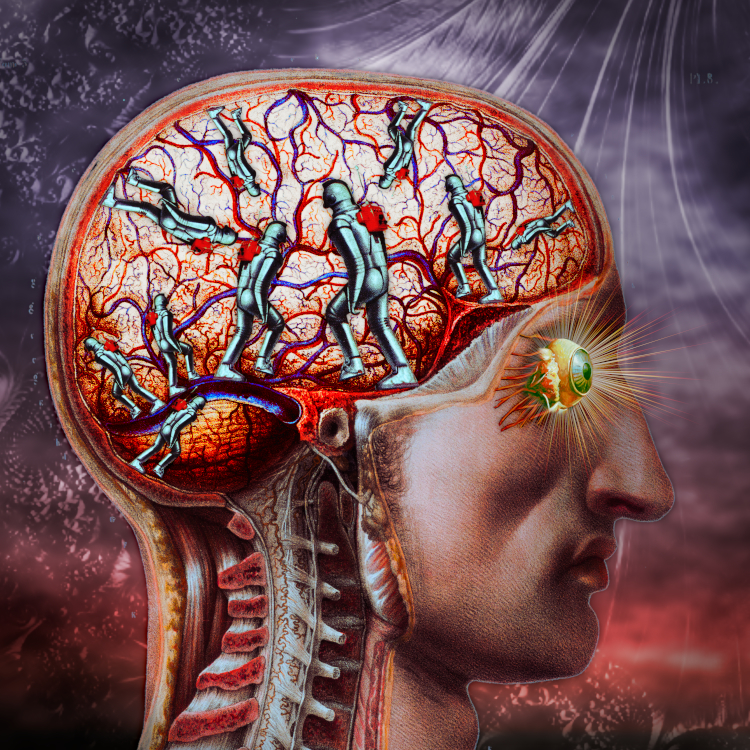
Cory Doctorow on anthropomorphizing Claude: why treating chatbot output as intentional mind-work misreads pattern-matching—and what that delusion costs culture and policy.