What I learned from six months of being stupid on purpose
Feeling stupid often, and in new ways
This reflection isn’t only for myself, but for anyone looking to improve at feeling uncomfortable with new experiences, especially when there’s very little around to give you comfort. Whether you’re a technical or non-technical reader - I’m sure lots of people can/will relate.
I hope the lessons I speak about can help anyone looking to tackle or learn something new.
This is also the first post to my blog, where I will regularly document my thoughts and experiences as I navigate my life, projects, and career. I don’t consider myself to be an expert in any aspect.
fully written by a human
Me
I graduated from Loyola U Chicago back in May of this year (2026) with a degree in Finance. I also spent four different summers working at a large healthcare company as a Financial Planning and Analysis Intern. Despite how amazing those experiences were, they also made me feel like my fate had already been decided, fostering an unhealthy perspective where careers outside of my “one-way path” were a waste of all the time I had invested.
However, that short-sighted mindset rapidly changed within my final semesters of school and blossomed into what I’d call a major pivot for the better - all because I started teaching myself a software I’d never touched in my life.
Who tf is JSON?
I’ve been an entrepreneur for as long as I can remember, with random side-hustles ever since I was in elementary school. From sneaker reselling, dropshipping massage guns, rug tufting, rainbow-loom bracelets, you name it, I’ve probably done it.
The newest one I stumbled into during my final semesters at Loyola was workflow automation in n8n. That was the first time I truly flexed the stupidity muscle, activated by operating outside my ol’ reliable set of finance/quant knowledge that I frequently relied on and rarely had the courage to step away from.
I’d heard about the software from social media, fellow entrepreneurs, and other productivity creators I follow. All were saying the same things: it improved business processes, multiplied productivity, offered passive income opportunities (the classic), and more. So like any easily influenced college student, I jumped on the hype train.
My original plan was to just automate the tasks that felt redundant in my schoolwork, career search, investment research, and basic day-to-day tasks. Then, I’d later pair my automations with the analytical capabilities of AI agents once I first felt comfortable making workflows that didn’t involve AI - all with hopes to create the foundation of a decent business.
I signed up, opened it, and was met with a blank canvas with access to hundreds of random nodes, triggers, and inputs to choose from that I had no idea how to use.
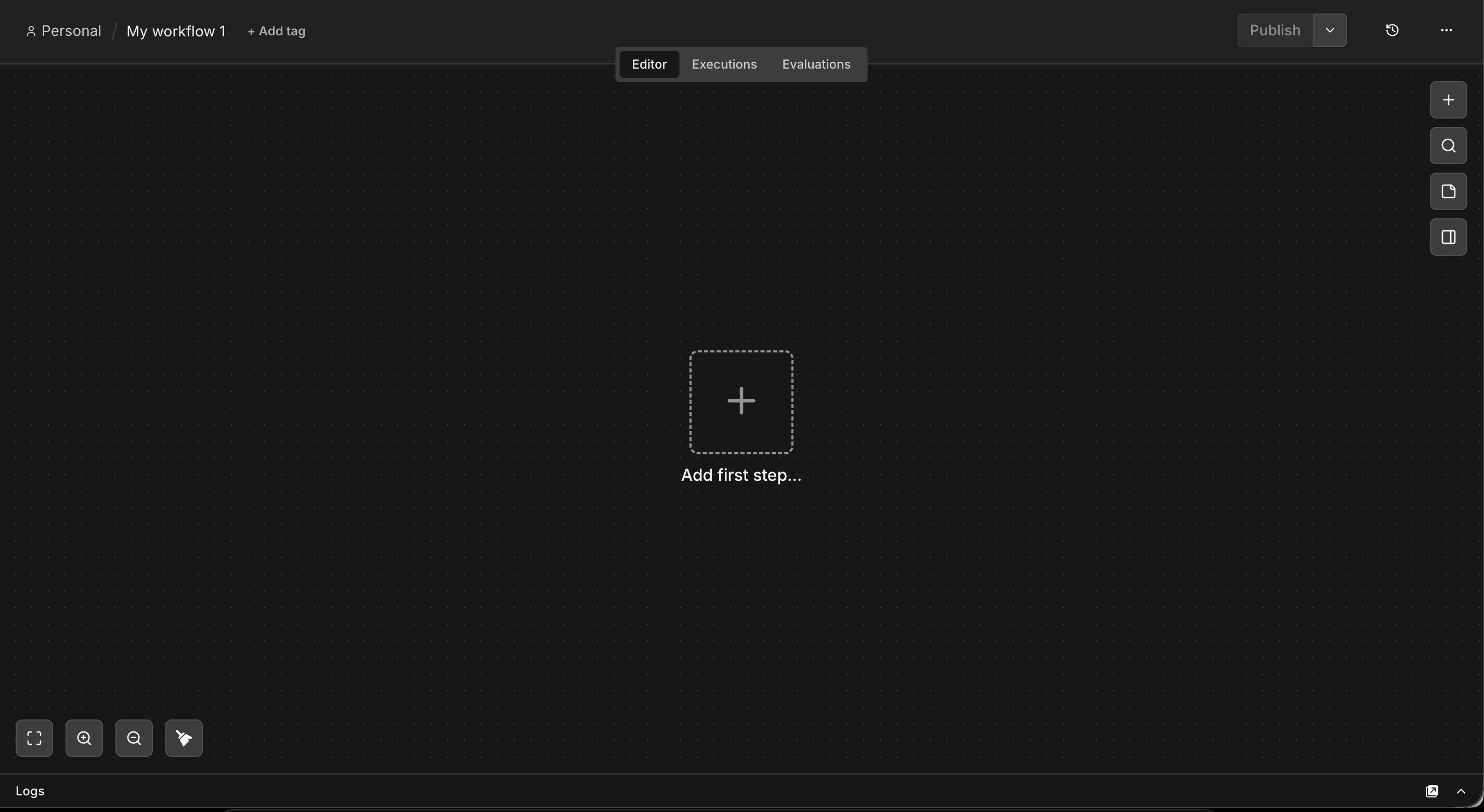
The first thing n8n shows on a fresh flow:
- n8n offers full autonomy over visualized automation via: manual or instance-based triggers, API calls, script logic, calendar scheduling, outreach, database editing, AI integration, and more.
- Nodes to work with: 400 official built-in apps with 2000+ extra from community packages
Starting with that blank canvas after being bombarded with colossal workflows that took up entire canvases made me question my limited skill-set and if it was even possible for me to do the same thing with no technical experience of any kind.
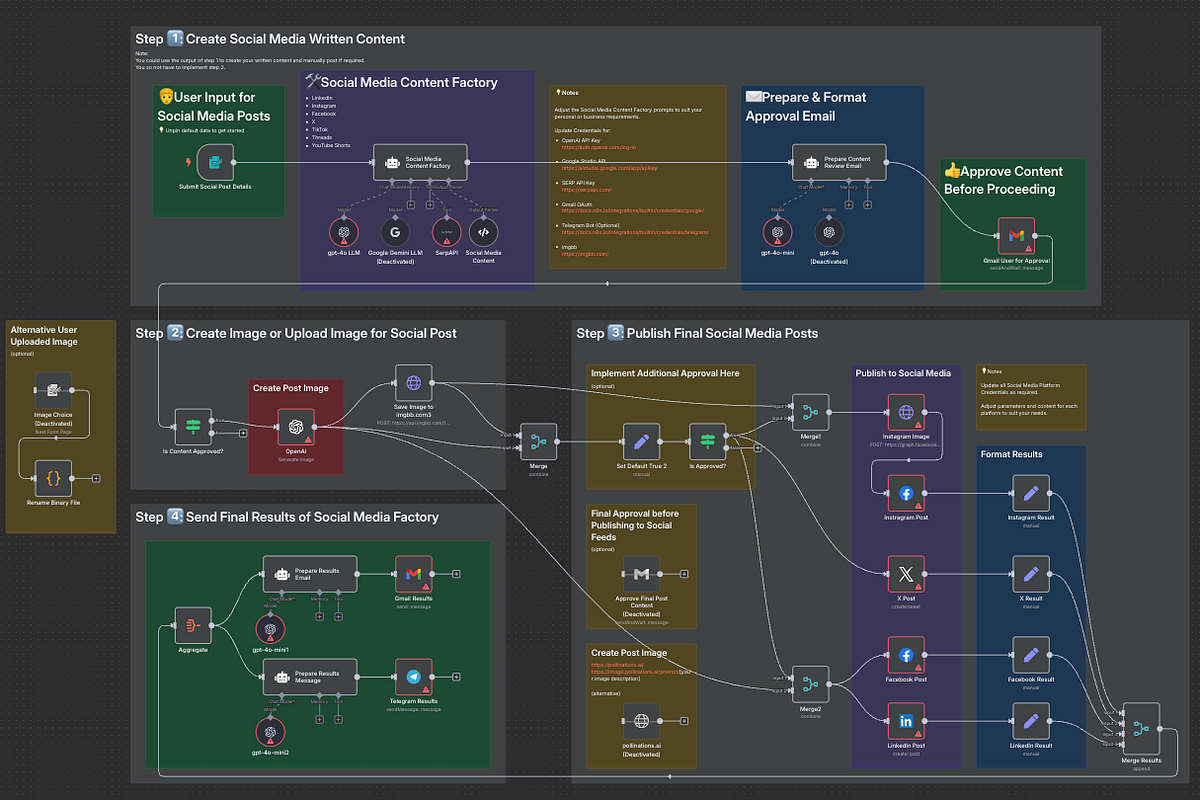
via a Medium beginner’s guide titled “it’s easier than you think”
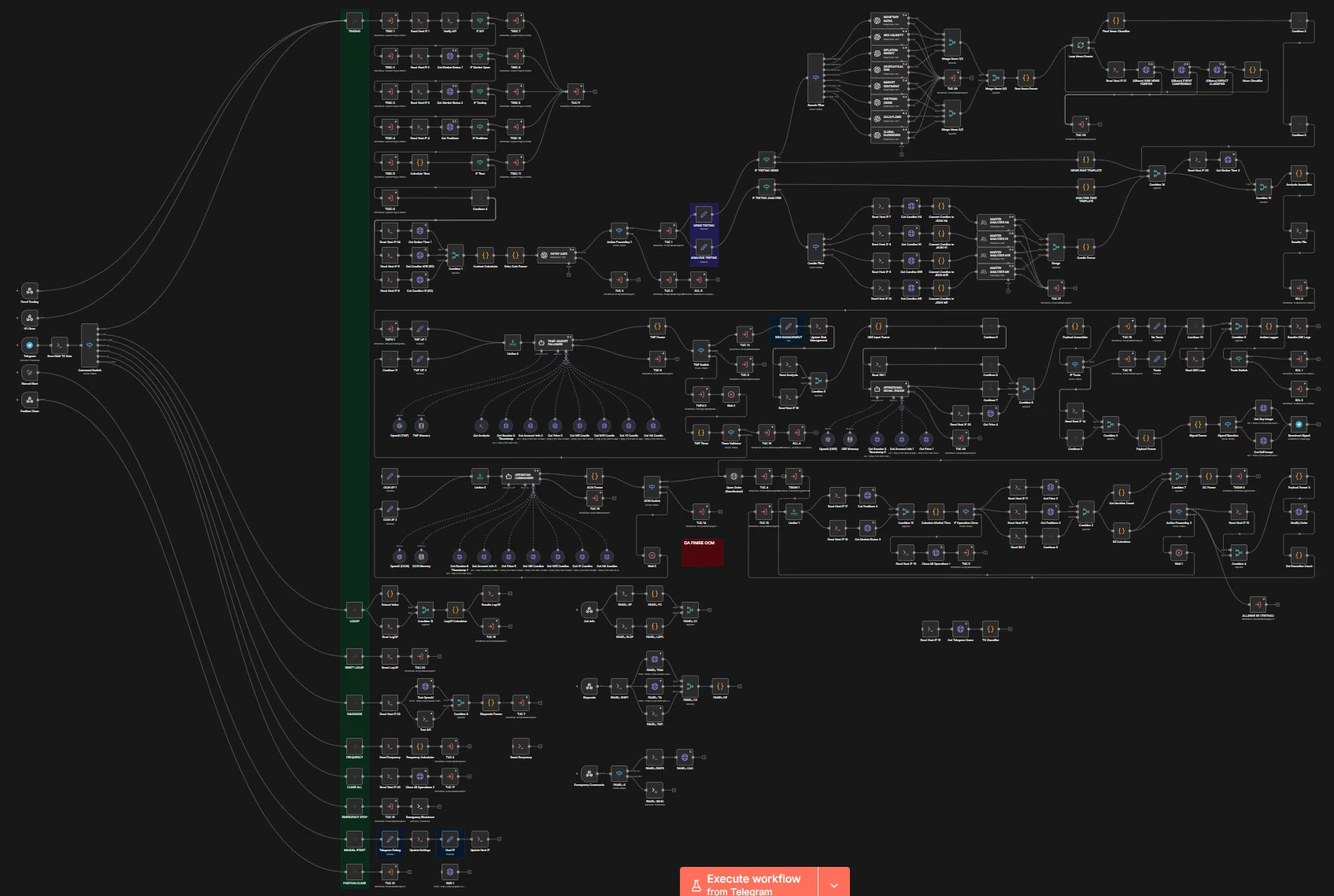
via Reddit thread surrounding complex workflows people have built

What I’d seen:
These were a few of the questions I asked myself after opening that first canvas and wondering if it was even possible for me to catch up to those that had been working with the system for YEARS:
- What’s an HTTP node for?
- Are “AI Agents” all everyone makes with this?
- Why does everything need an API key?
- WHAT IS an API key?
- Is coding my biggest bottleneck?
And most importantly:
“How do I not know what to do already?”
Just Quit Tomorrow
“Wow, I’m stupid” is what I told myself, all because I didn’t miraculously know what to build first, or what workflow could “revolutionize my productivity” like forum writers and “experts” had claimed. As silly as it sounds, I felt pretty down during my start because it completely exposed how little I knew about basic topics in the technical world. Especially ones that were considered second nature to those more experienced than I, and frequently used in workflows I’d seen. Even with the fact I was just starting out - I, for some reason, still expected myself to figure it all out then and there.
I realized in that moment and admitted to myself: This wasn’t a part of my pre-programmed script. My first instinct was to quit and cancel the subscription to save myself from the disappointment, but I replaced my desires to quit with the mindset:
“shut up and try to figure it out.”
This was my own little way of creating a wake-up call to remind myself I was fully capable of building something useful and had the ability to do exactly as I had planned as long as I put in the work.
Now saying “just figure it out dude” isn’t a magic cure that can be used for everything in life, but when it comes to doing hard things without reasonable motivation or comforting amounts of experience - sometimes you need that wake-up call to keep you on track.
- Quick nod to some stuff that always gives me an extra push:
- “Quit tomorrow”
- “TONY STARK WAS ABLE TO BUILD THIS IN A CAVE, WITH A BOX OF SCRAPS”
- “Does Jeff Hardy ever climb down the ladder when already halfway up?”
Blocking Noise
I spent weeks scavenging Reddit posts, Medium articles, and reviewing YouTube guides to learn as much as possible from those that knew more than I did. But looking back, I honestly have regrets with how much time I invested in doing that. I learned that there’s only so much I could gain from just watching videos and reading before getting stuck in what I call tutorial limbo - where I’d spend never-ending amounts of time watching others and researching random questions instead of actually doing.
I feel that tutorials and informative reading are always good starting points for getting down the basics of a skill. However, I realized getting to a point where you reap the benefits from what you’re hoping to learn requires you to do it yourself and fail. A lot.
This naturally resulted in me feeling stupid a lot.
Limbo
I’ve been a victim of tutorial limbo myself because it honestly feels amazing to think you’re learning a new skill. The dopamine rush from all things shiny and envisioning yourself replicating content you’re reading/watching - it’s addicting. Regardless, the heartbreaking reality is that it’s rarely ever productive. I’m still learning to avoid falling into that void to this day.
The most damaging action, though, was actively exposing myself to the best outcomes the skill had to offer that were only possible with months or even years of experience.
For me this was as simple as:
- Doomscrolling forums with workflows from creators that have been creating automation content for years on end
- Regularly going through the portfolio sites of SWEs to see the types of workflows they were making, and what workflow projects they created to get to where they are.
- Only reading forum posts like:
- “I made ___ this month from my automation business”
- “I’m an ex-SWE and quit my job all thanks to automation, and my business makes ___ monthly and here’s what I made to do it”
While in the process of learning, it’s by far been the biggest trap and motivation killer I’ve experienced. It’s fine observing what’s possible with a skill, but never overdo it to the point where you paralyze yourself with doubt like I did. Especially in the age of social media larping, you never know who’s just straight up lying for attention, profit, or in an active hunt for new victims to buy their snake-oil-esque course.
What I’ve found to actually be productive was starting small and “just doing.” Specifically, seeking out mistakes within MY way of work to actually learn what worked for ME.
Furthermore, reminding myself that the ability to even start was an accomplishment in itself. Many never make it out of the limbo loop in the first place, so starting has always been a win in my book. So many past interests of mine carry hours that went into googling and asking people “how do I get better at ___,” instead of actually doing what it took to figure it out for myself.
Wasted potential survives and feasts on those stuck in the limbo loop.
Baby Steps
Nobody comes out of the womb sprinting full speed (hats off if you did). You need to learn to crawl first, and my first time crawling was a simple workflow that sent me a Slack notification when I received an email response about a job I applied for at Google.
I spent the first day attempting to wire the trigger to my Xfinity email as a first test for random emails - only for it to never work.
- “Why not start with Gmail in the first place? There’s literally a node for it.”
- Lol who knows what I was thinking. I was being stupid. You live and you learn.
So my first day was spent not even making it past a trigger node while getting sidetracked by YouTube limbo waving all kinds of “My n8n AI Agent that ___ for me” carrots in my face.
But the next day was where I triumphed; I learned about the basics of API keys and their use-cases. I finally integrated my Gmail and Slack APIs, and had a functional flow in no time.
All it took was me sending every error msg I got from each node to Gemini and googling “what does error _ mean in n8n” or “how to fix error _ n8n” a billion times.
This is the hand-holding I was doing that made me feel the most stupid. But as a result of those errors, it also turned into an important lesson surrounding data/string formatting without me even knowing.
Can this easily be done by setting up notification preferences in the careers page? Absolutely. But who cares? The point was to start and make something that worked - and this workflow did exactly that. I got the notification of my rejection to the job in a timely fashion to my Slack with green execution signals next to it. Success.
Strides
From then on, pretty much Monday - Sunday I spent my free time making random workflows with nodes I’d never used before on purpose just for the sake of improving. Slowly but surely after two months of never looking at automation content outside of error resolution, and breaking things every day - I became more advanced with what I was making.
Here are a few of the “advanced” flows I came to create during my last semester:
Job-Prospecting Triggered on Slack msg
- pulls current-state resume and Excel file that tracked my job search from Google Drive,
- and utilizes Gemini integrations to query for roles that fit my criteria that I had yet to apply for with an attached resume with curated advice from career center data.
eBay Flipping
- Triggered every 5 mins (only possible after migrating my workflows to a self-hosted server for ∞ executions),
- calls eBay API for my specified products,
- scores incoming listings based on criteria I set for a “deal” after shipping, seller fees, and the avg of the last 10 sold of the product.
- Deals were sent to Telegram notifying me of how much I’d profit if I bought the product the second it was listed.
Dispensary Inventory Monitor
- Built a workflow for a licensed dispensary in the South Loop of Chicago monitoring and tracking the live inventory of their competition around the block.
- Scheduled triggers made API calls to the competitor’s site three times a day to observe new, stale, and retired products at open, lunch, and close.
- Middle nodes handled filtration, formatting, and standardization of all junk that came alongside the responses with the product info.
- Final output was clean product data flowing into Excel sheets that handled analysis.
- I was able to accurately understand and extract sales strategies, pricing methods, and estimated profit flow from the regular snapshots.
- Every execution was stored with PostgreSQL to create a queryable history of the competitor inventory allowing for analysis on past snapshots as well.
CME Trading Challenge
- Two workflows I leaned heavily on across a week-long challenge:
Inflation Report (CPI) flow:
- Triggered 15 mins before the monthly inflation report released and pulled recent pricing on the futures contracts I was trading with from Yahoo Finance.
- Those prices were then used to create “first pass” plans for a buy or sell with specific entry and exit points, all scaled to my risk right before the report released.
- Both plans were sent to me via Telegram and were updated accordingly after actuals from the BLS API were pulled and compared to the forecasts, which determined the plan that would be kept.
News Signals:
- A second workflow also fed me signals during the day using webhook triggers to process articles and headlines from specified news sources moments after they were released.
- Keywords were scored in JS code nodes (n8n Cloud can’t import Python libraries), weighted by my trading plan for the challenge, and the flow delivered signals I could act on throughout the day.
Sprinting
These workflows are a small sample of the hundreds that I made over the span of my last semester, and almost 50% of the stuff I made either didn’t work, was dropped, or had no real use-case that benefitted me.
I also didn’t even realize n8n had an MCP server and API that could be used to create workflows with AI agents that utilized best practices until I was TWO MONTHS IN.
Probably the sole reason why none of my early stuff worked lol
But because of that delayed realization, I learned so much about myself and things I never imagined I had a passion for. Just from this experience, I was able to learn and utilize in new projects of mine:
- REST APIs + authentication (API keys, OAuth 2.0)
- Finally who JSON is, parsing him, and data mapping
- Reverse-engineering undocumented APIs (DevTools, cURL, .har files)
- Web Scraping
- JS and regular expressions
- Webhooks, polling, and cron triggers
- AI agents with tool calling, prompt engineering, and capabilities of deep memory
- RAG modeling within my agents (embeddings and vector stores)
- MCP servers
- Self-hosting on my own domain
Those are just a few topics I can name off the top of my head, and reading that list as I type this makes me feel so proud of myself. I never envisioned myself coming this far with topics I literally knew nothing about (and honestly still don’t) after having that one-way street mindset before starting. It’s sparked numerous new passions, business opportunities, and connections I never imagined myself having a year ago.
Biggest Takeaways
If I could give anyone a piece of advice from my personal experience of always looking to learn new things, it would be:
Just start. Ignore the noise.
The hardest part about this process was easily starting. More so than dealing with the failures and disappointments. Looking back, there were numerous factors that played a role in what kept me from doing so:
- Threads from SWEs referring to n8n users as “course sellers looking for a quick buck”
- Reddit posts saying “n8n/automation is cooked” (I can’t even count the amt of times I’ve seen this one)
- Condescending replies under posts from beginners asking questions
Progress didn’t happen until I stopped exposing myself to insight and content that held no value to me or my journey.
Too often we’re fed advice and input from sources that aren’t worth listening to, and even if they are worth listening to - their advice isn’t universal or applicable. I’m not saying to ignore all advice or practical norms, but when trying to improve any aspect of yourself, everything you consume matters. If you choose to consume external input, make sure it’s the right stuff that applies. Nothing compares to learning what works for you, and if you spend too much time consuming what works for others, you’ll never become the best version of yourself.
Turning away from the void sucked. I had no shiny carrot to chase and I realized I knew nothing. But in the end it paid off 10x more than I expected.
Present Day
Fast-forward to present day, and the lessons I learned started to spill into my life for the better. The practice I gained with scripting within code and filter nodes led to numerous business ventures powered by agentic coding, all of which I operated as a student.
My effort to balance the nonstop ideas I had from my newfound passion across programming, solving problems with data, and raw hunger to just build eventually led to me developing my biggest project yet. That project and its MVP eventually landed me early-stage acceptance into Chicago’s #1 tech incubator. Being surrounded by some of the brightest minds in my own backyard with the ability to learn from them without judgment has pushed me beyond what I ever thought was possible for myself.
Avenues that didn’t exist a year ago for me only came after I made the decision to be content with feeling stupid, and I hope anyone reading this feels more motivated to do the same.
Maybe my own advice isn’t worth listening to either. But nonetheless, I truly hope everyone reading this can experience the same thrill I’ve been feeling since I started being content with stupidity.