01. Your Apple will have dinner waiting
Creative Computing, November 1984 · PDF page 202. Source scan.
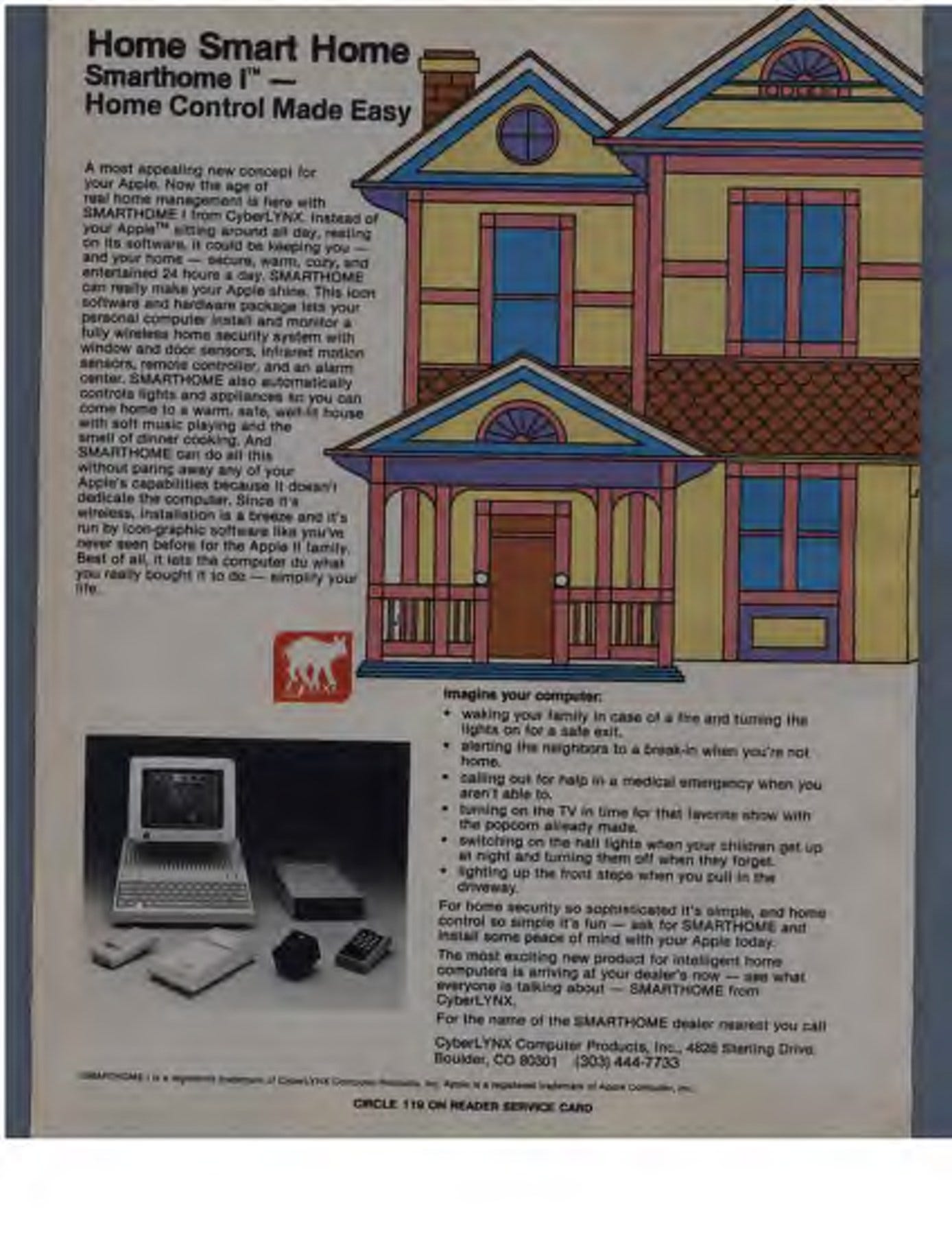
CyberLYNX promised lights, music and dinner waiting when you got home. Owen W. Linzmayer found Smarthome I dependable in his apartment, though the instructions were confusing. Once configured, the controller could run without the Apple. You still had to prepare the food. [1]
02. An online party with one glass to wash
Creative Computing, November 1984 · PDF page 241. Source scan.
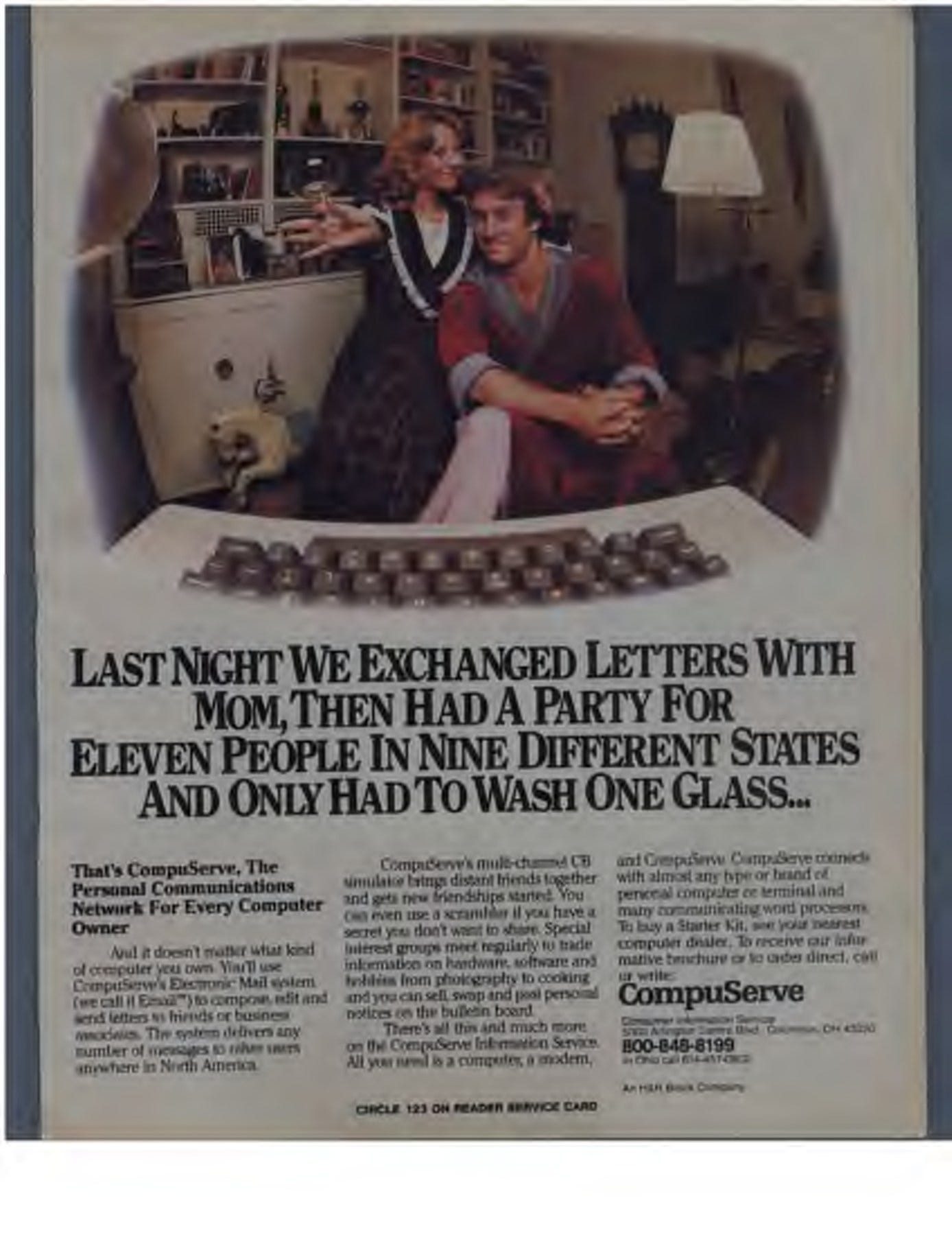
CompuServe offered a party across nine states with one glass to wash afterward. In a separate 1984 account, Steven K. Roberts chatted from a hotel while someone in Washington arranged for beer to be delivered to his room. [2] The modem could bring you company and, with help, a drink.
03. Your Mac will find the right wine for dinner
Macworld, November 1984 · PDF page 67. Source scan.
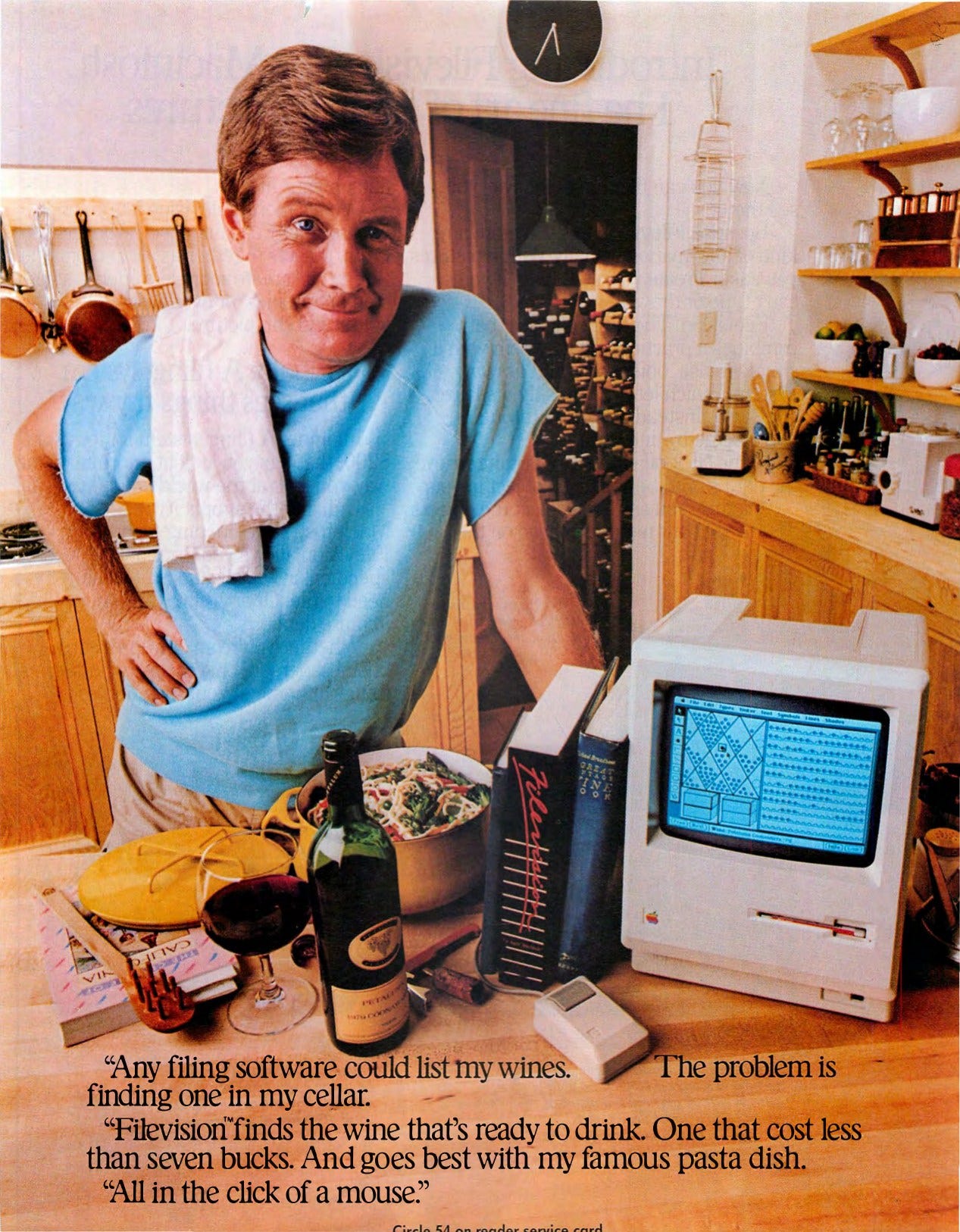
Filevision promised to find the right wine for dinner by linking database records to drawings; somebody still had to supply the wine knowledge. A review abstract describes searches using up to four criteria. [3] Practical Computing liked it, but making a working copy on a single-drive 128K Mac took 17 disk swaps. [4]
04. Artificial intelligence is already a bridge game
COMPUTE!, January 1994 · PDF page 171. Source scan.
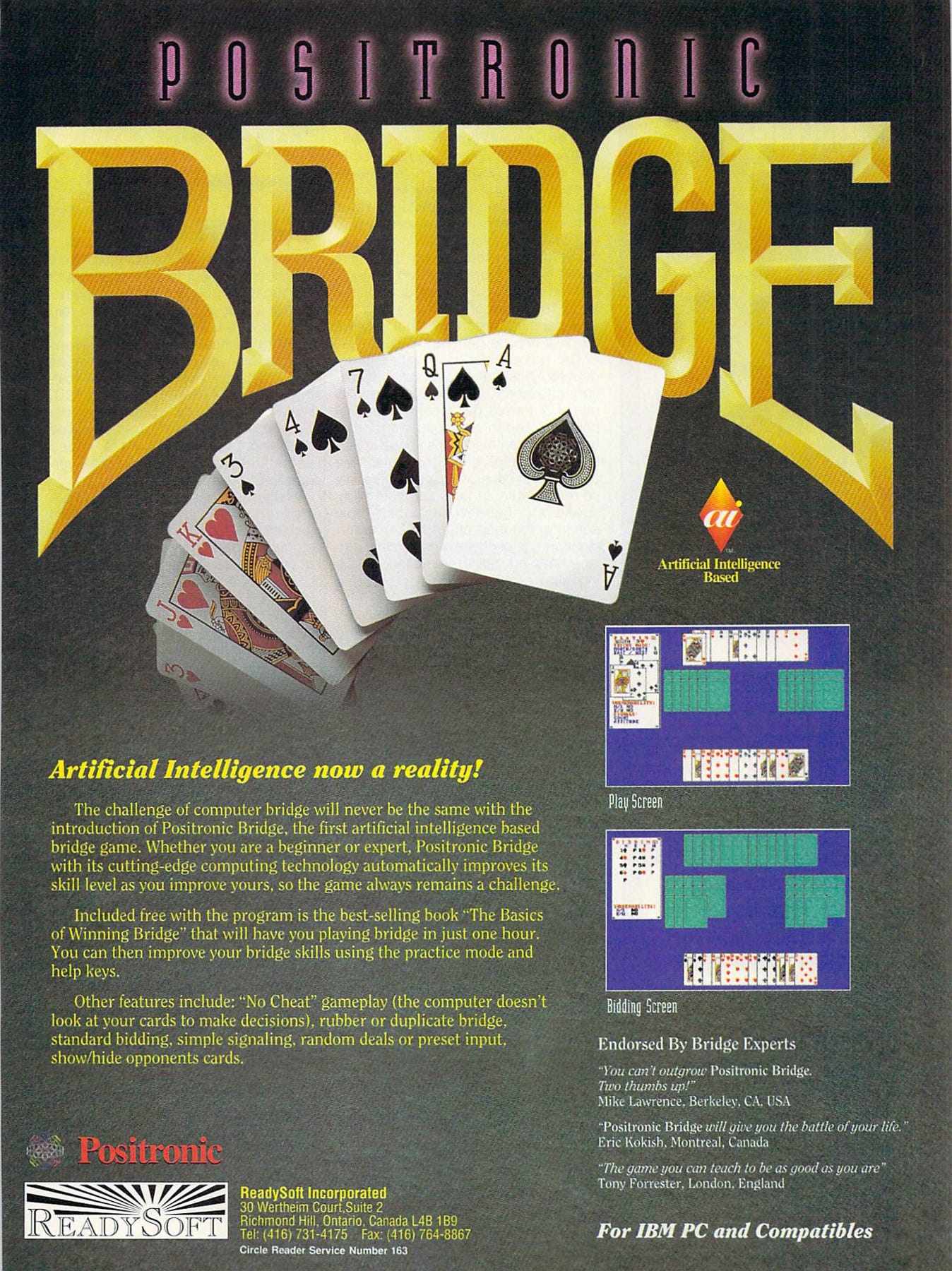
Positronic Bridge promised an opponent that improved alongside you. David E. Lindeman found decent hand play and rigid bidding, but could not tell whether it had learned anything about him. The ad also promised duplicate bridge; his version offered rubber scoring only. [5]
05. Mind-reading software beside an assistive computer
Creative Computing, November 1984 · PDF page 257. Source scan.
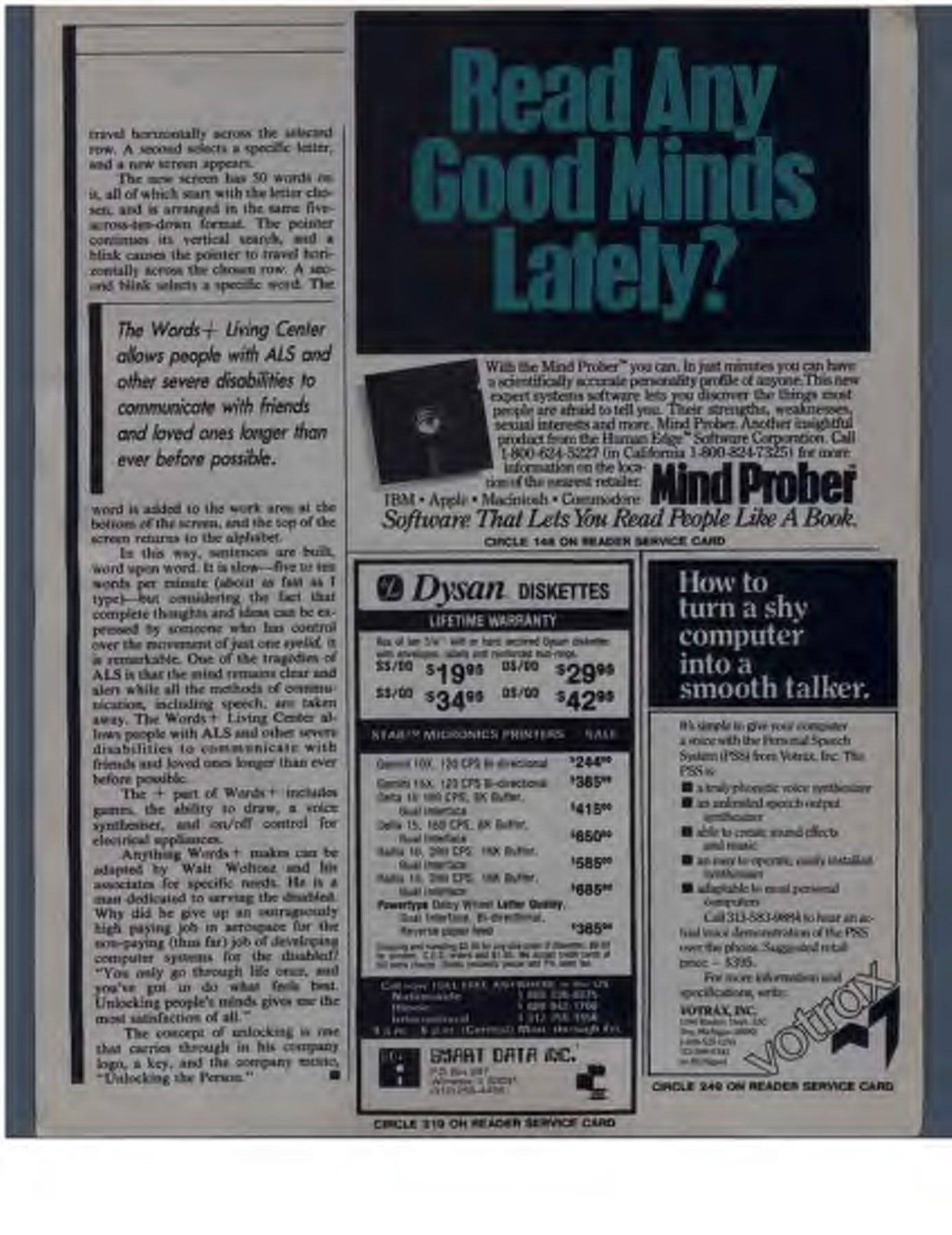
Mind Prober turned questionnaire answers into personality reports, with accuracy still unproven. [6] Beside it, Peter McWilliams described using an eye switch to select letters and words by blinking. He reported 5–10 words per minute from his own trial. [7]
06. Perhaps the robot should be a pet
COMPUTE!, January 1984 · PDF page 104. Source scan.
COMPUTE!, January 1984 · PDF page 106. Source scan.
Two continuation pages, PDF 104 and 106.
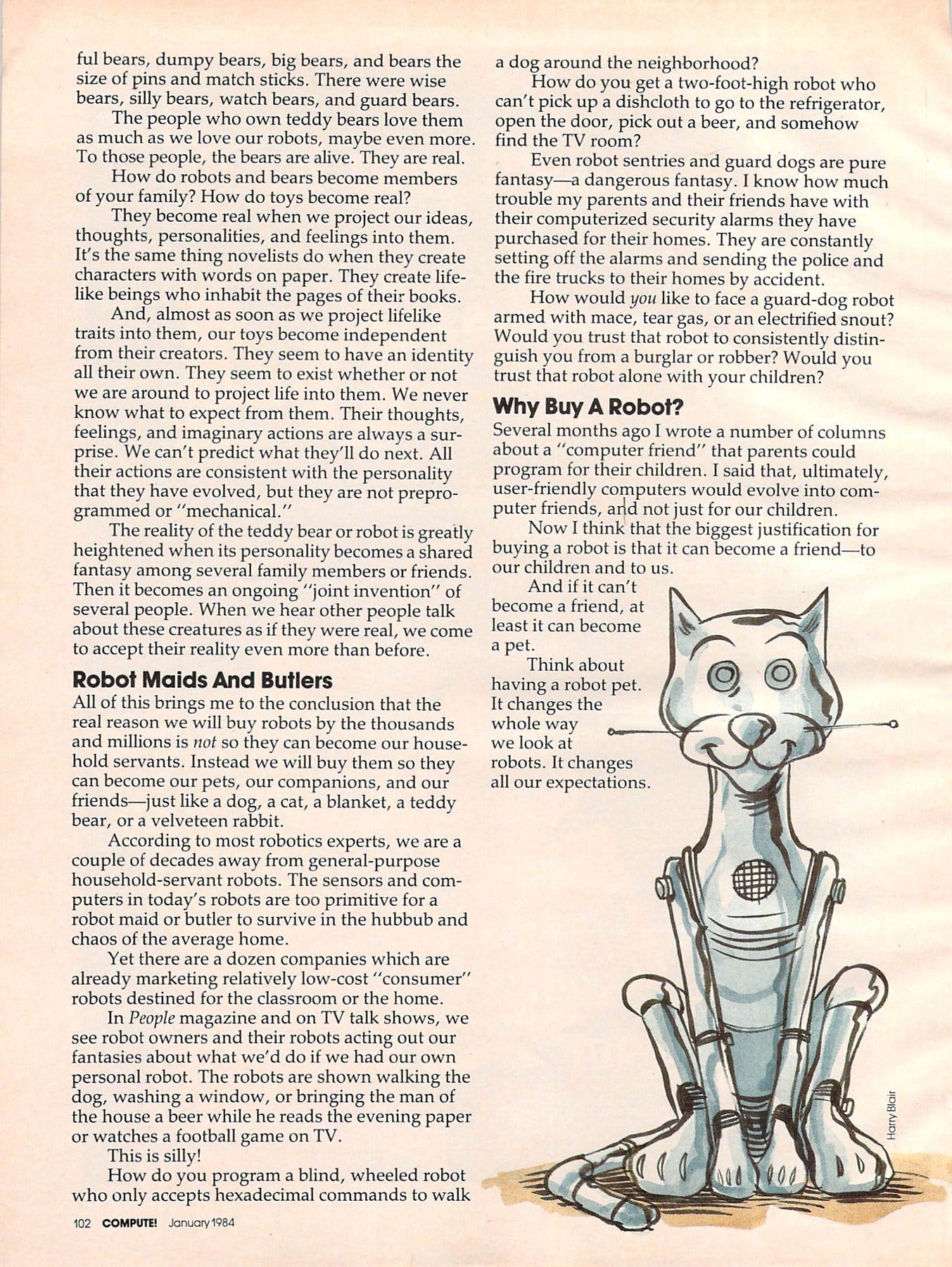
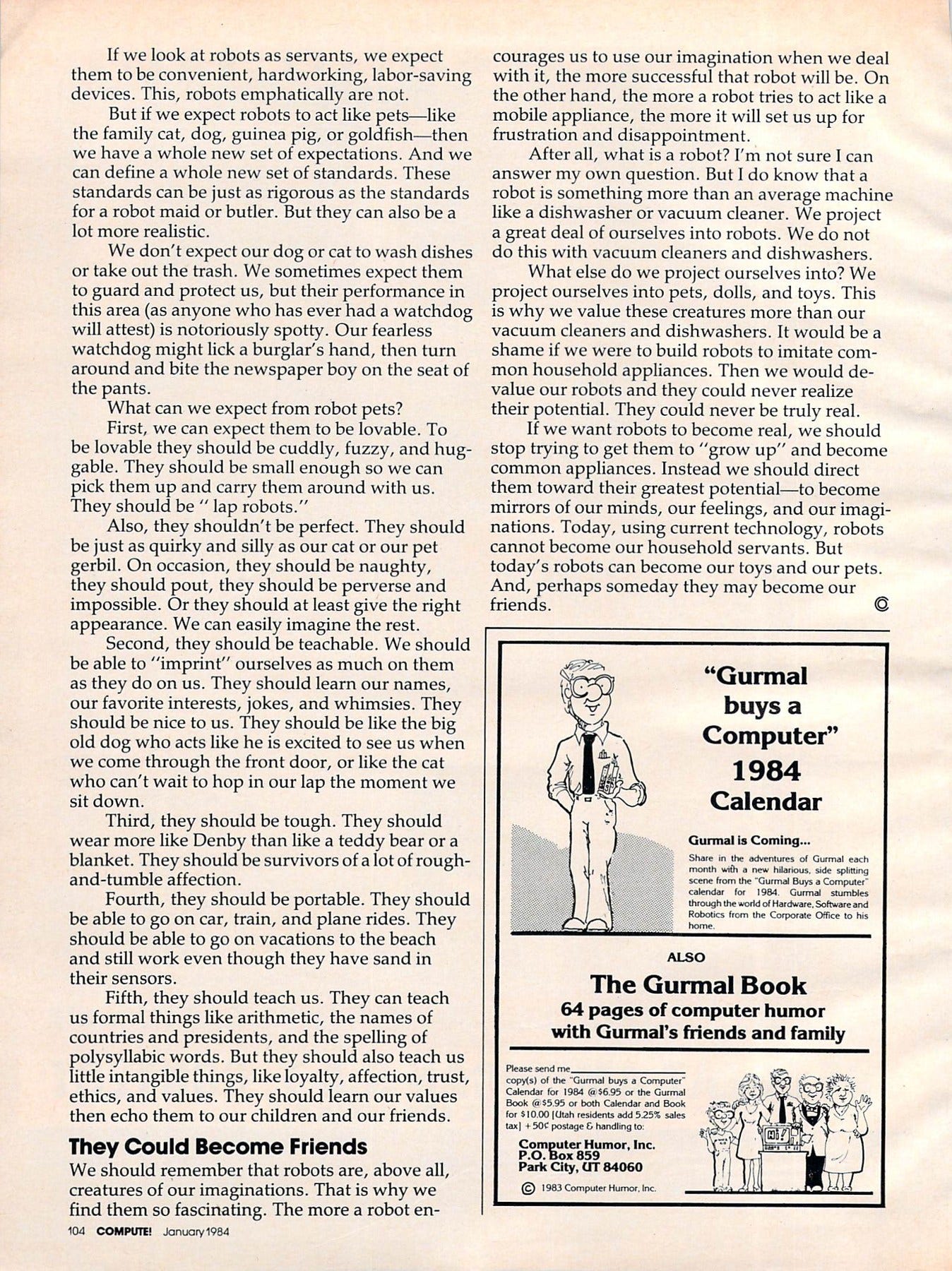
COMPUTE! wanted a robot pet: lovable, teachable, durable, portable and educational. One family in the discussion was already giving robots personalities and dressing one up. [8] Sony’s $2,500 AIBO arrived in the US in 1999, with behavior shaped by interaction, though that hardly ticks every box on the wish list. [9]
07. Benjamin Franklin could have published every evening
PC Magazine, May 29, 1984 · PDF page 56. Source scan.
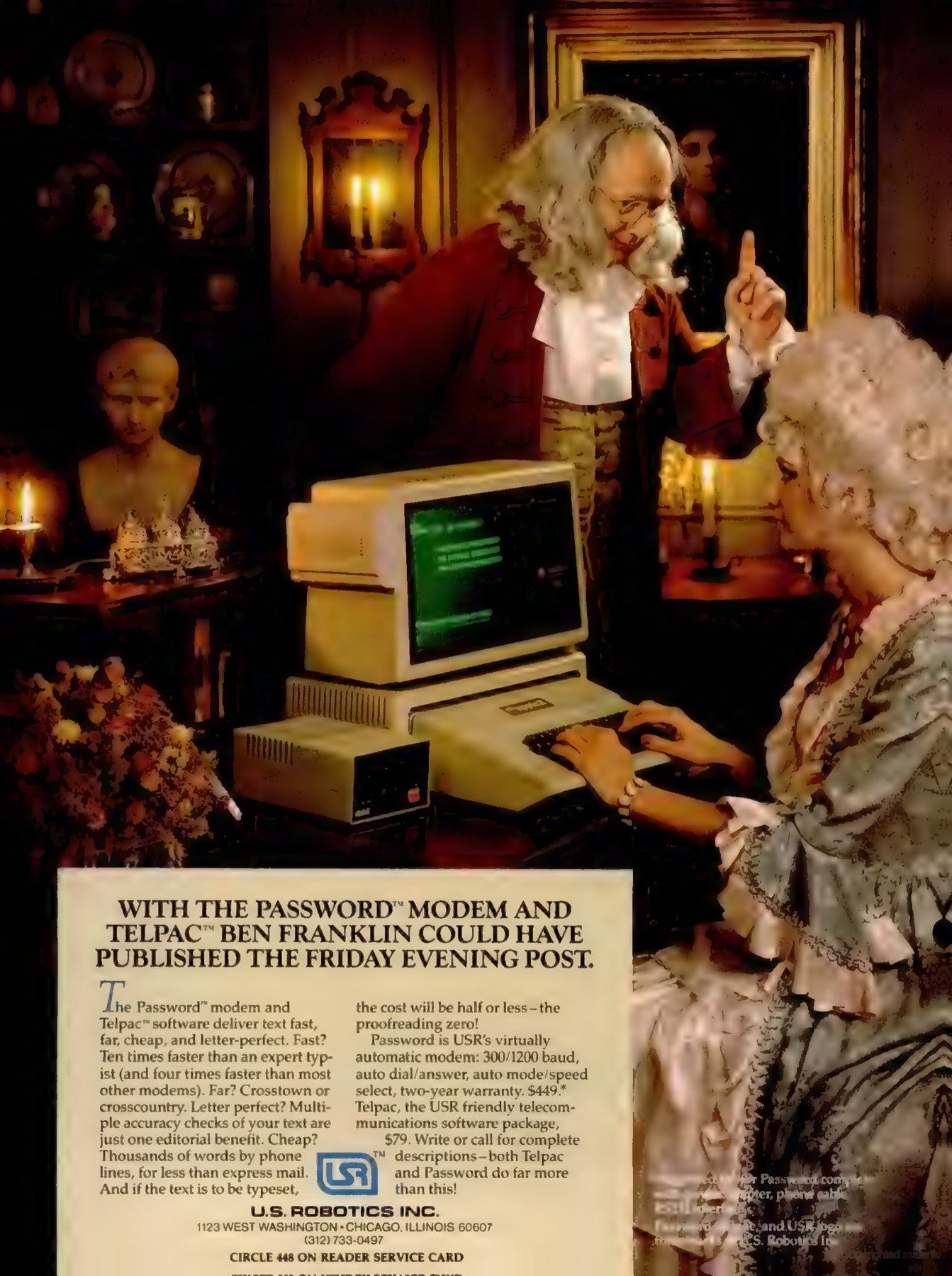
U.S. Robotics imagined Benjamin Franklin publishing electronically with its Password modem and Telpac software. The manual admitted setup could be difficult; a later Atari user-group report records a Password owner using it with a 520ST and different software. [10] [11] The modem was real; Franklin’s evening edition was the sales pitch.
08. Run a software company, as a game
COMPUTE!, June 1984 · PDF page 49. Source scan.
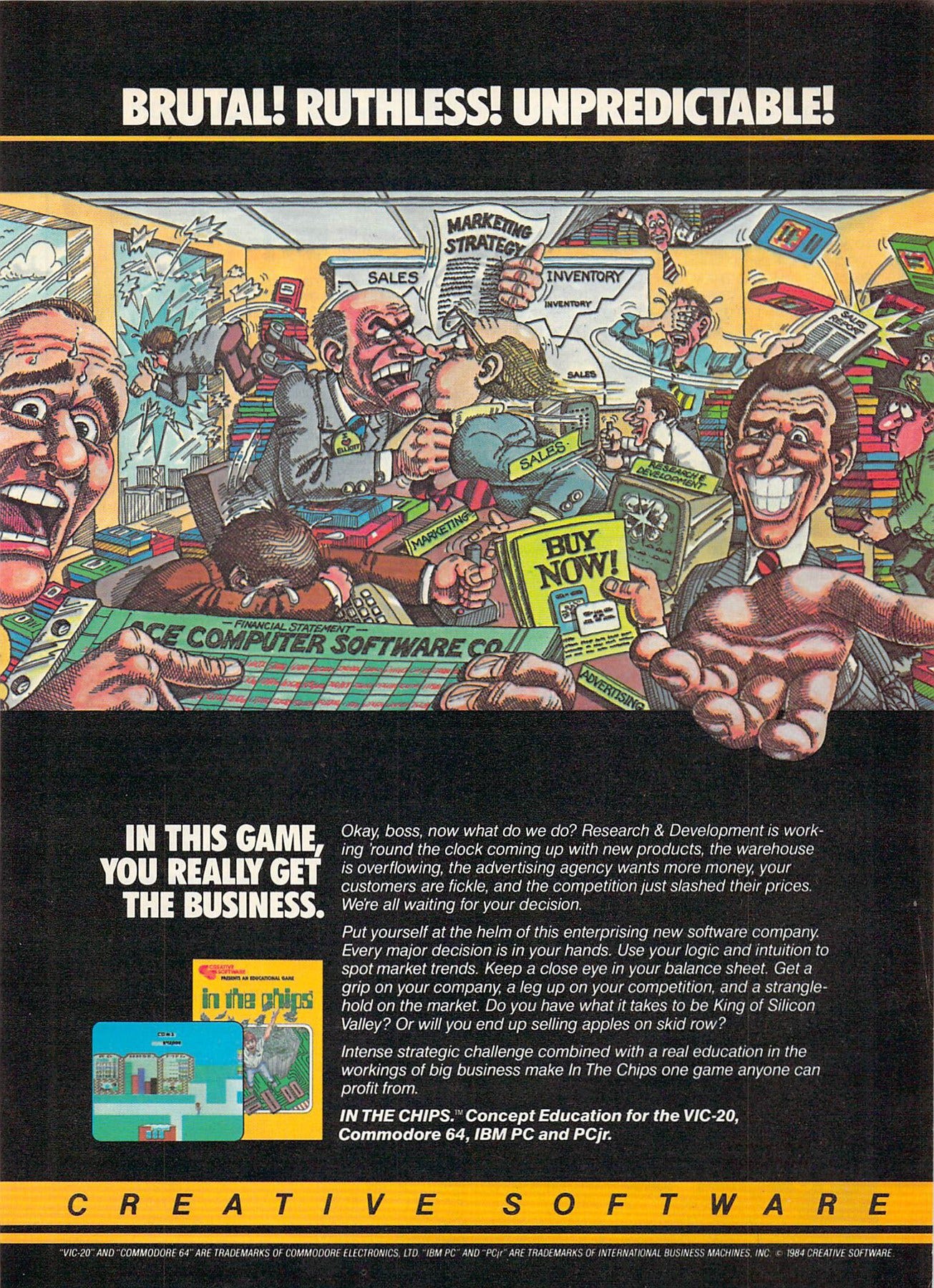
In the Chips gave you a software company, fickle customers and competitors cutting prices. Tony Roberts’s VIC-20 review starts the player with $100,000 to spend on development, production, advertising and marketing. [12] Finally, a management career you could switch off.
09. Einstein asks whether your computer is still playing games
COMPUTE!, June 1984 · PDF page 93. Source scan.
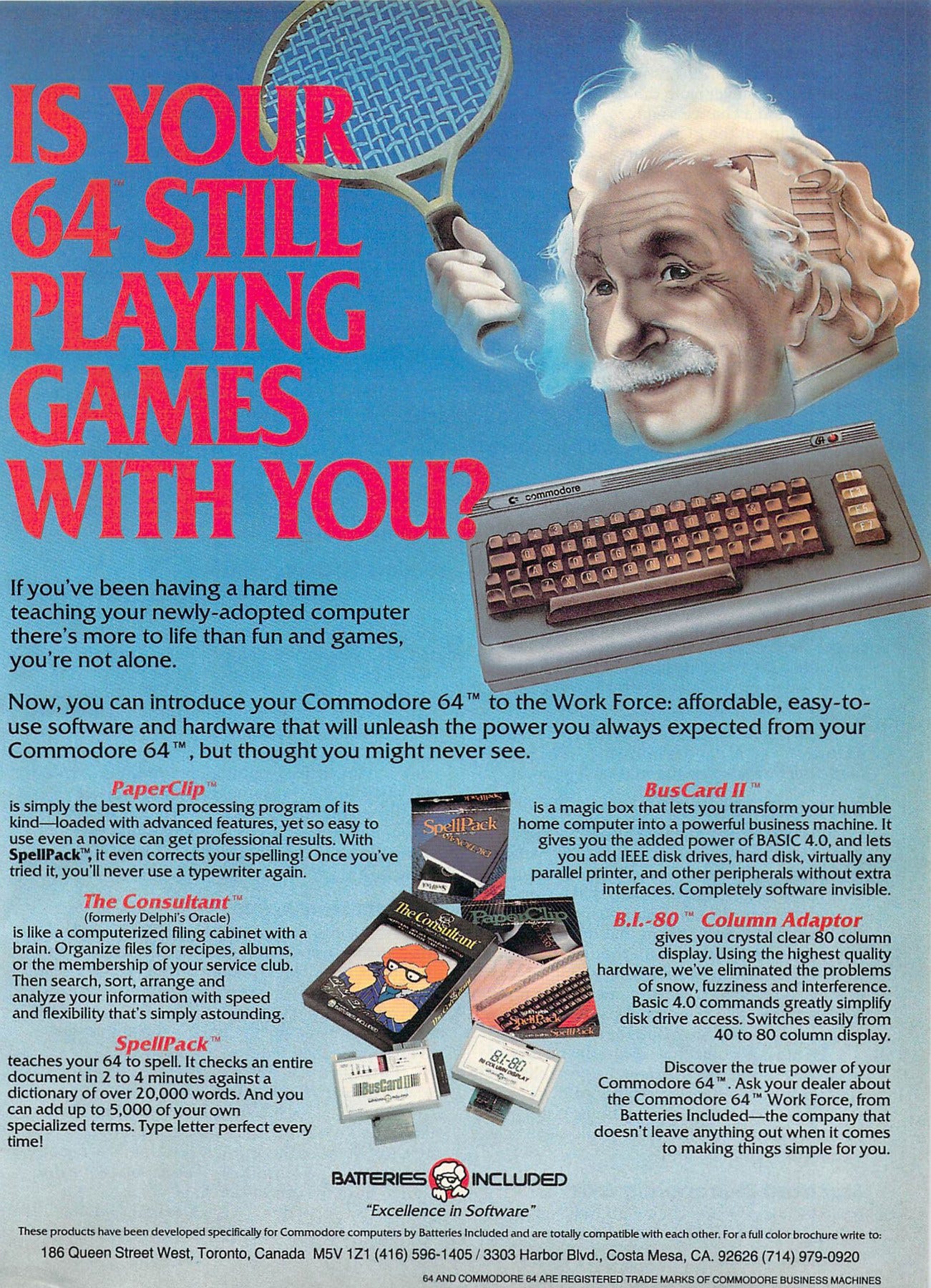
Batteries Included recruited an Einstein caricature to guilt Commodore 64 owners into doing some work. Its Work Force range included writing, database and spelling tools. Ian Wright’s PaperClip review found useful formatting and printer support, early bugs, and an 80-column preview that needed a sharp monitor. [13]
10. Six office machines become one
BYTE, January 1984 · PDF pages 154, 155. Source scan.
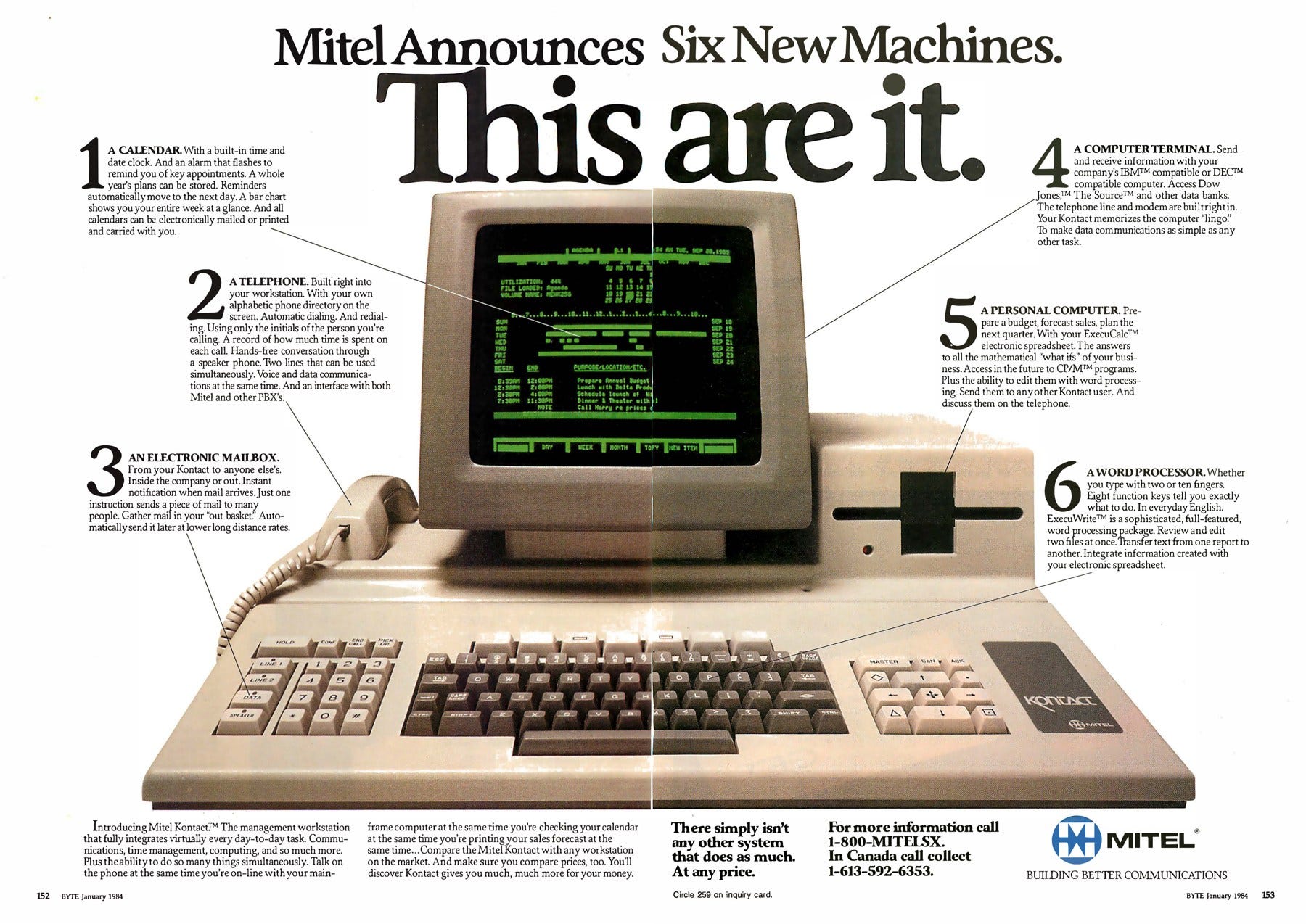
Mitel packed six office tools into Kontact and promised CP/M software access later. Ingenium preserves a unit used at home and work by a Mitel product manager. [14] A 1985 report put distributor Lanpar’s installations at about 300, with disappointing sales and limited software compatibility. Whether the promised CP/M access shipped remains unclear. [15]
11. An ear-full of computer speech
Creative Computing, June 1984 · PDF page 124. Source scan.
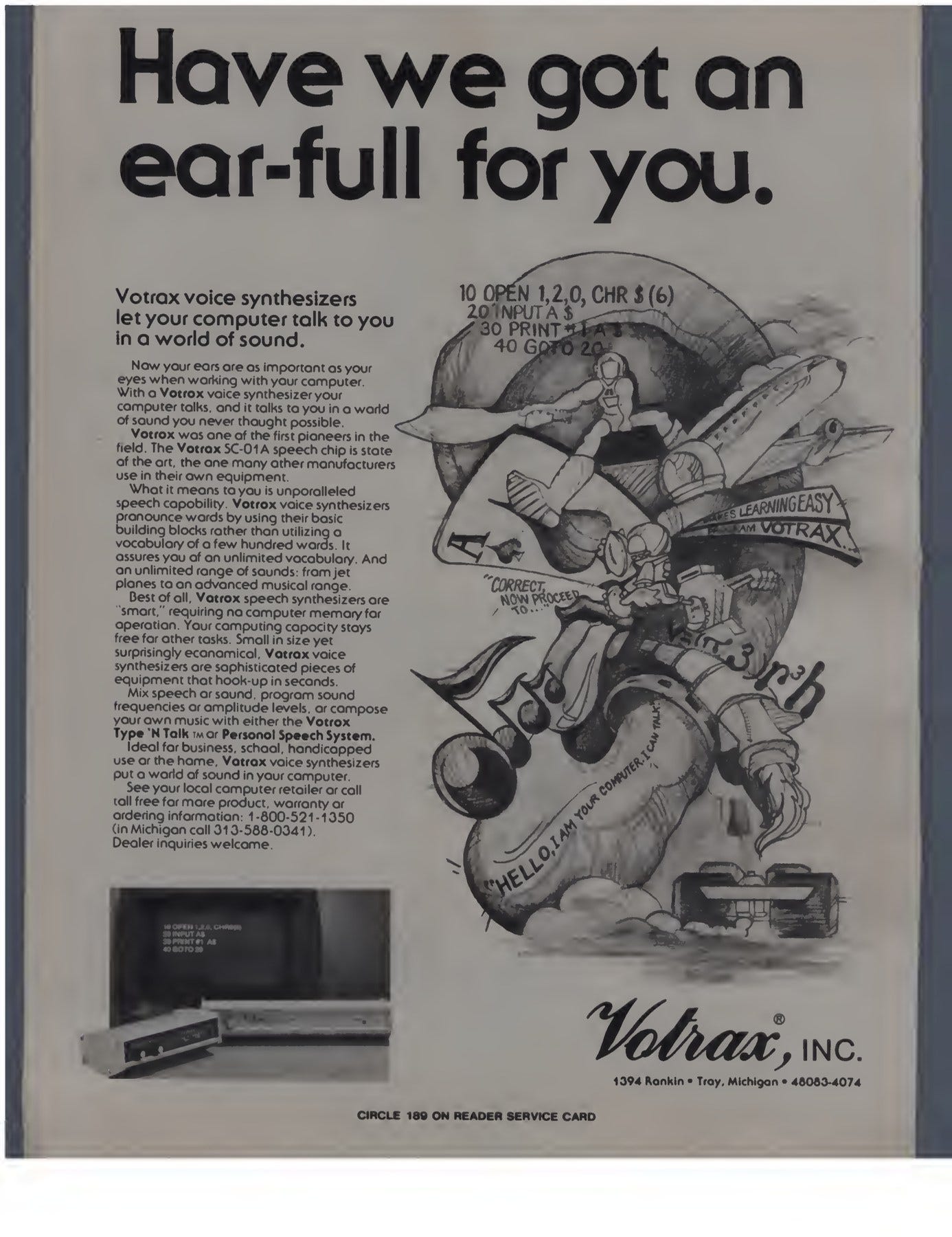
Type ’N Talk turned computer text into speech. Its manual offered spelling tricks and phonetic instructions for fixing pronunciation, so the computer sometimes needed help saying what you meant. [16] The Henry Ford keeps a unit and its documentation. [17]
12. Your own story inside Star Wars
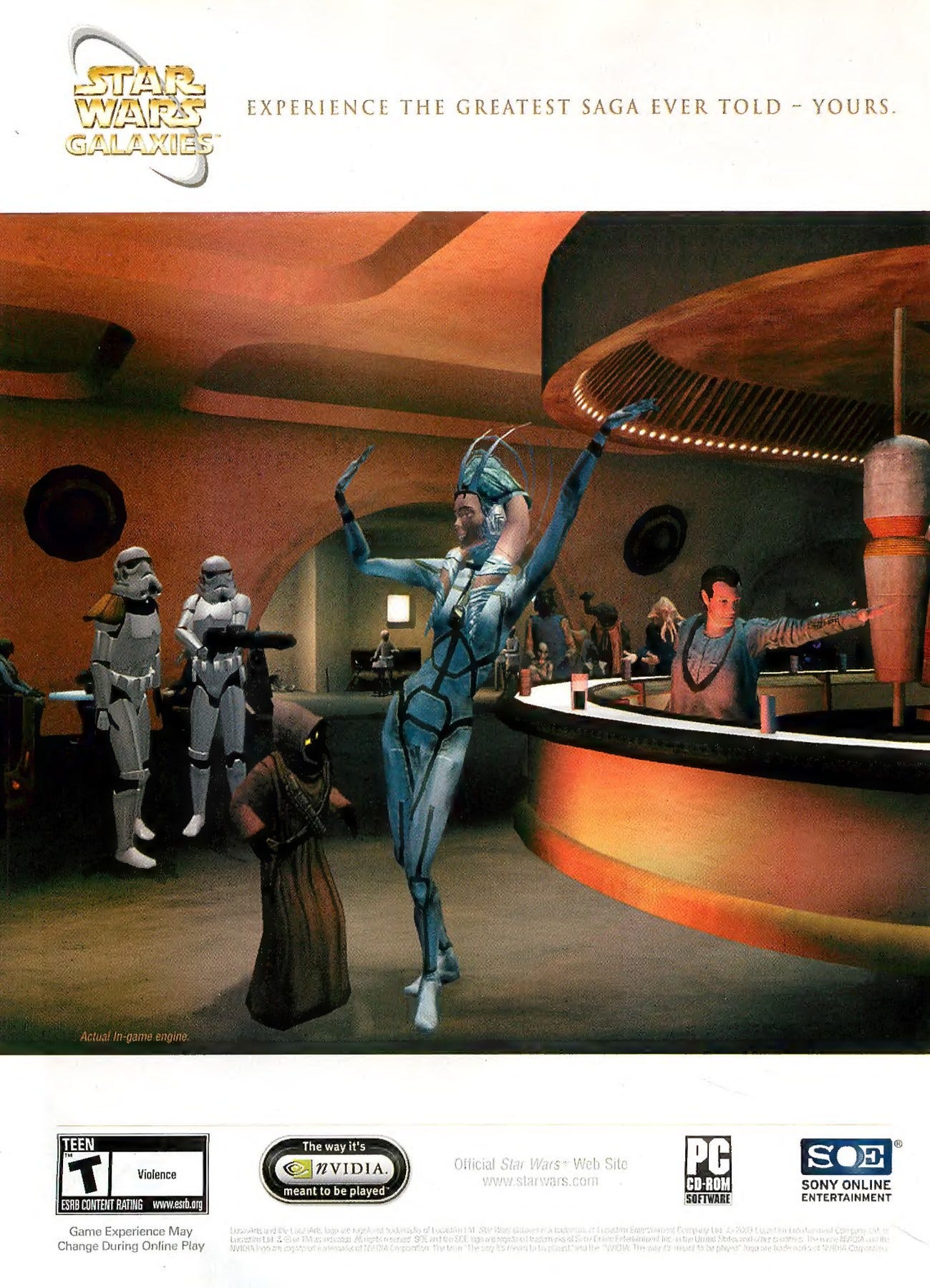
Computer Gaming World, January 2004 · PDF page 6. Source scan.
Star Wars Galaxies offered a life in the cantina, not just another firefight. Raph Koster discussed advancing as a musician in March 2004. [19] The surviving 2007 manual describes music, dancing and group performances that helped players recover from battle fatigue, though it cannot settle every detail of the 2004 game. [18]
13. Finding friends in cyberspace
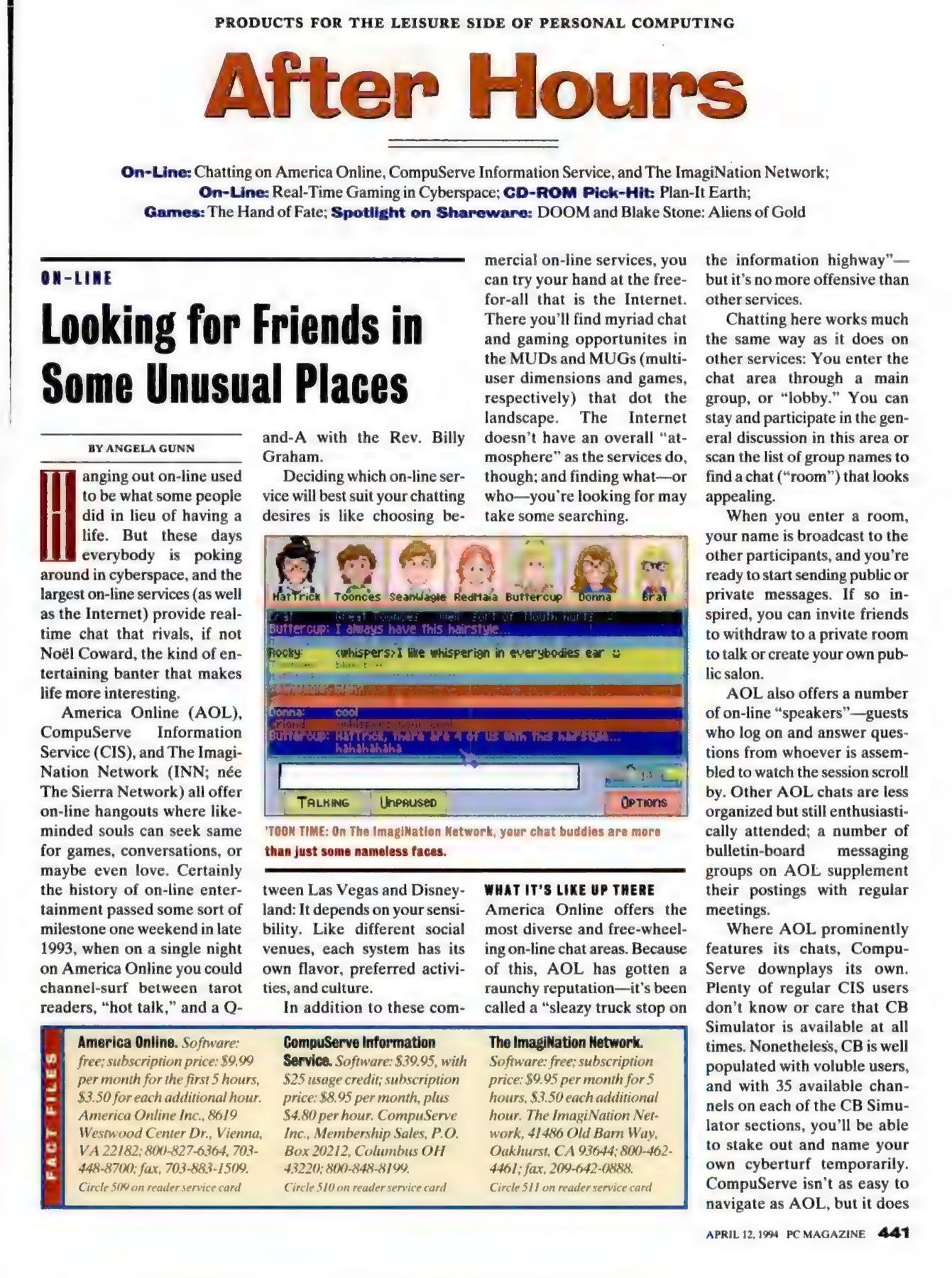
PC Magazine, April 12, 1994 · PDF page 439 · printed 441. Source scan.
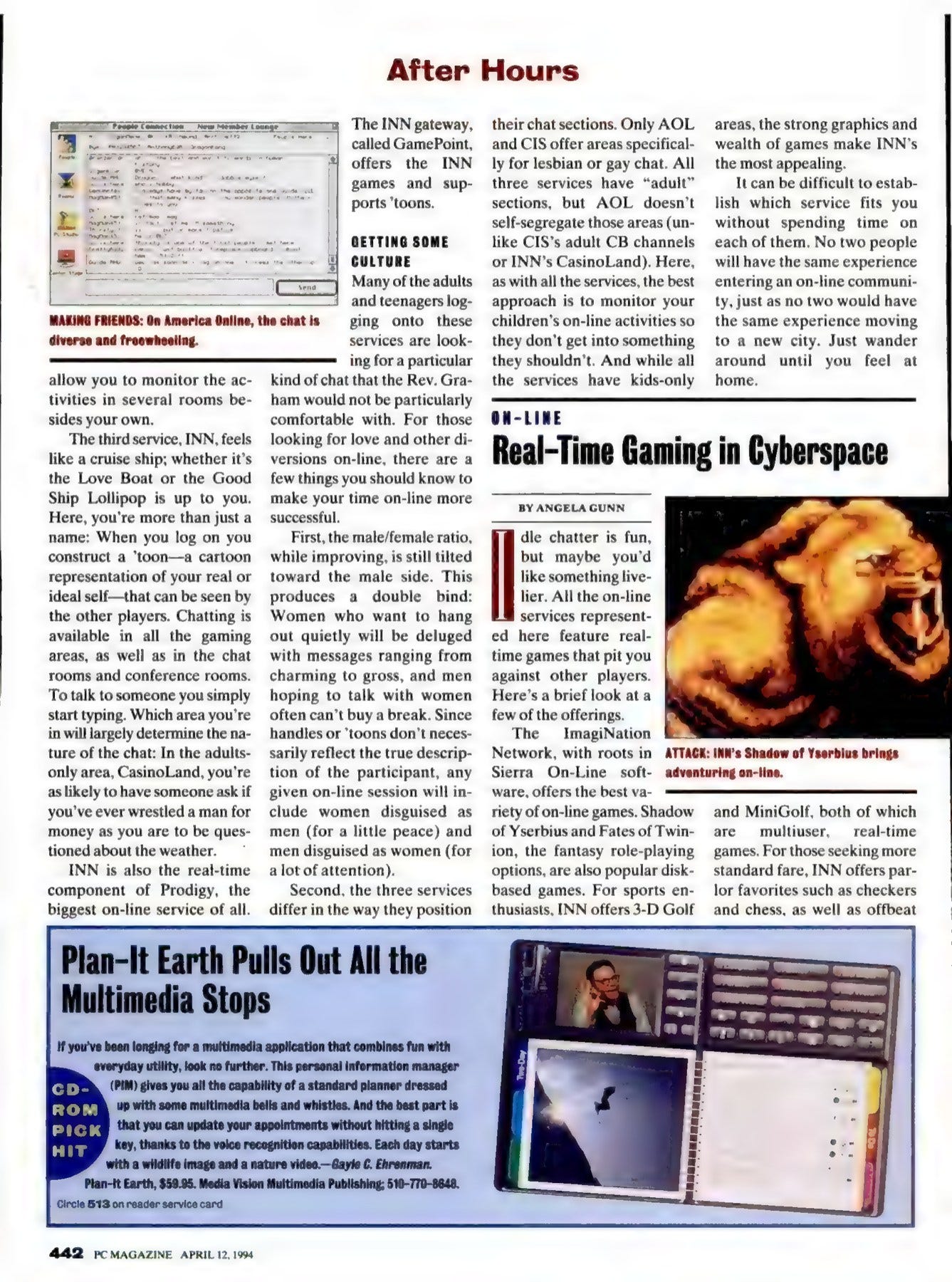
PC Magazine, April 12, 1994 · PDF page 440 · printed 442. Source scan.
Two consecutive pages: printed 441–442, PDF 439–440. The gaming coverage continues beyond this selection.
Angela Gunn’s 1994 tour of AOL, CompuServe and The ImagiNation Network found chat rooms, cartoon identities, unwanted messages and people who weren’t quite who they claimed. AOL and INN plans included five hours; after that, friendship was billed hourly. [20]
14. The computer lands in the shopping cart
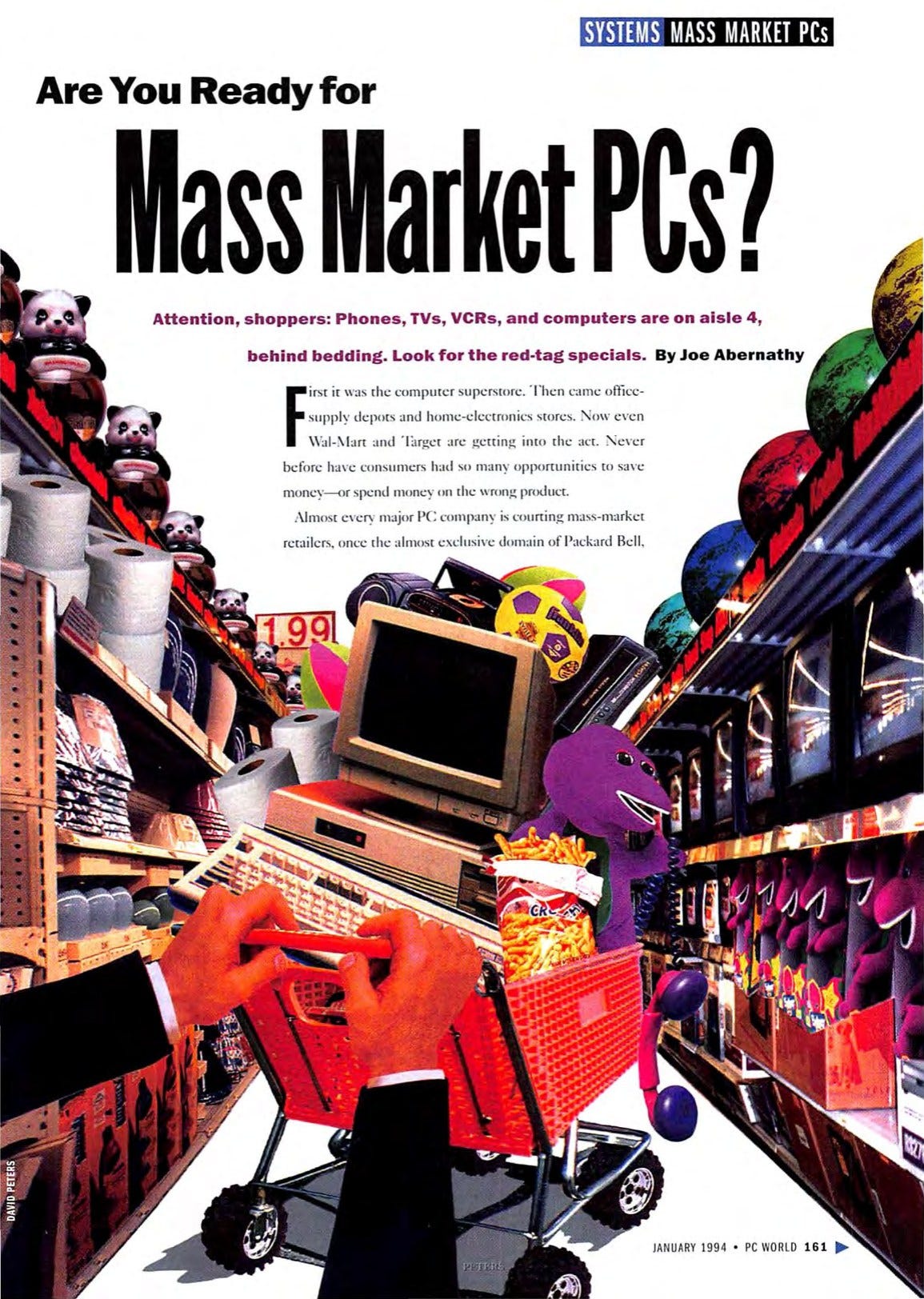
PC World, January 1994 · PDF page 165. Source scan.
Joe Abernathy followed PCs into Wal-Mart and Target, where buyers needed demonstrations, advice and support. [21] Daniel Pinkwater bought a Compaq Presario 425 despite struggling with its tutorial. A friend then set it up to skip Windows and launch his familiar word processor. [21]
Sources and selection
These fourteen selections come from a browsing collection of 21 magazine issues in 1984, 1994 and 2004. They were chosen for their images and specific claims, not as a representative sample or a scorecard of predictions. Their order reflects visual impact, the specificity of the promise and the available follow-up. Many advertise products already on sale. Dates refer to the magazine issues; PDF page numbers identify the scans and can differ from the printed labels. Linked reviews, manuals and contemporary accounts support the notes. The source notes identify material consulted only as abstracts or indexed passages. No products were personally operated for this article.
- Owen W. Linzmayer, Home control, CP/M, and a flat screen for Apple II users, Creative Computing (June 1985), p. 84.
- Steven K. Roberts, A traveler orders beer by computer, USA Today (November 1, 1984).
- Earl Babbie, Filevision, Social Science Microcomputer Review 3(3) (October 1985), pp. 274–277. Public review abstract and ratings; full text not consulted.
- Practical Computing (January 1985), Filevision review, p. 104. Contemporary hands-on review; indexed passage consulted.
- David E. Lindeman, A Bridge Too Near, Computer Gaming World 116 (March 1994), pp. 142, 144.
- Richard Mansfield, Mind Prober, COMPUTE! 59 (April 1985), p. 60.
- Peter McWilliams, Of Passion and Pet Projects, Creative Computing (November 1984), PDF 252, 254, 257.
- COMPUTE! (January 1984), family-robot discussion, PDF 101–106.
- Sony, Sony Launches Four-Legged Entertainment Robot (May 11, 1999).
- U.S. Robotics, Password Instruction Manual, pp. 3–4 and Appendix E (p. 37).
- Gigi Bisson, BAAUG Speaks Out, Antic (August 1986).
- Tony Roberts, In The Chips: Playing To Win In Business, COMPUTE!’s Gazette (April 1984), p. 76. Contemporary VIC-20 review; indexed text consulted; direct download returned HTTP 403.
- Ian Wright, PaperClip Update, TORPET (January 1984), pp. 55–56; PDF 61–62.
- Ingenium, Mitel Kontact, object 2006.0202.001. Museum record with donor account; indexed text consulted.
- Robertson Nickerson Limited, An Assessment and Forecast (1985), vol. 2, p. 35. Contemporary industry report; indexed passage consulted.
- Votrax, Type ’N Talk Operator’s Manual (1981), pronunciation and phonetic programming sections.
- The Henry Ford, Votrax Model 100 Type ’N Talk, 1981.
- Star Wars Galaxies manual, chapter 11: Dancing and Musicianship.
- Celia Pearce, A Conversation with Raph Koster, Game Studies 5(1); interview March 2004. Designer interview; indexed excerpts consulted.
- Angela Gunn, Looking for Friends in Some Unusual Places / Real-Time Gaming in Cyberspace, PC Magazine (April 12, 1994), PDF 439–440; printed 441–442.
- Joe Abernathy, Mass Market PCs, and Daniel Pinkwater’s Presario sidebar, PC World (January 1994), PDF 165–168.